When we think of the Netherlands, we think of endless fields of tulips, windmills rising from them, delicious Dutch cheese, and countless bicycles on the streets. All of this is true. But another symbol of the country, its wealth and breadwinner for centuries, has been the sea.
The Netherlands established itself as a maritime power. The sea became not only a channel for trade, but also a gateway to world politics. Opening this door, the first thing a traveler saw was Rotterdam, the maritime gateway to the Netherlands and the largest port in Europe.
In our guide, we will follow in the footsteps of medieval sailors and also begin our acquaintance with the country in Rotterdam. To do this, you don't need to buy your own ship; all you need to do is book book a tour to Europe with visa support.
Rotterdam — brief information
Rotterdam is the second largest city in the Netherlands. However, it lacks the pomp and circumstance associated with the "crowned" capitals of Amsterdam and The Hague.
This city has always earned its fame and wealth through hard work. First, it had to reclaim land from the sea. Then, every year, it had to fight against the elements' attempts to take back what they had "stolen." Finally, Rotterdam entered into a marriage of convenience with the endless blue expanse, actively using waterways for trade and to promote the kingdom's influence in the world.
The city owes its prosperity and fame to the sea. Until 2004, Rotterdam was the largest port in the world, until Shanghai took that title away from it. However, its position as the largest port in Europe is unchallenged, as Rotterdam's position in this list is very strong.
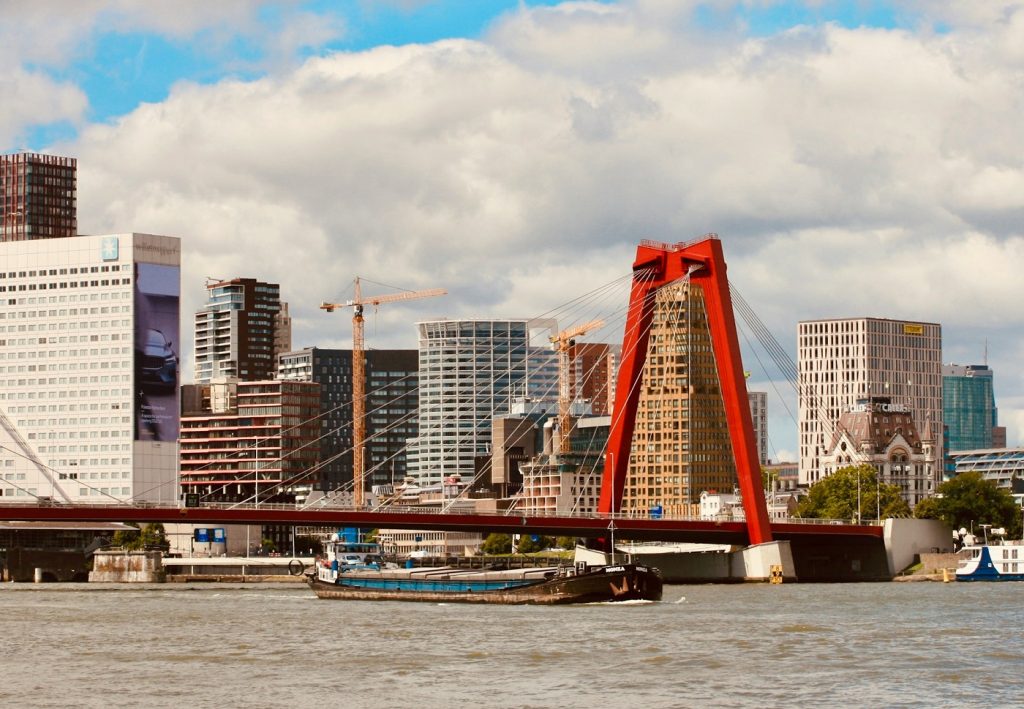
The maritime gateway to the Netherlands was severely damaged by the Germans' barbaric carpet bombing on May 14, 1940. Aerial bombs almost completely destroyed the city. The authorities decided not to rebuild Rotterdam after the war, which is why it has such a modern and technological appearance today.
Rotterdam: how to get there
To reach the port capital of Europe, you can choose between buses, trains, or planes with equal comfort. All of these modes of transport are well developed.
Bus
The most affordable option is the bus. Green Flixbus buses connect Rotterdam with most Western European capitals. You can also use the ticket aggregators we have compiled in a separate articleto find a convenient and inexpensive trip.
Train
The Netherlands has a well-developed high-speed rail network, including international connections. Sometimes traveling by train is even cheaper than by bus. For example, the journey from Berlin to Rotterdam by train costs five euros less than by bus and takes five hours less. It is best to search for departures on the NSInternational website.
Airplane
The fastest way to get to Rotterdam is by plane. The city has its own airport, but it is rarely used. Most flights arrive at Schiphol (which, incidentally, is recognized as one of the best hubs for connecting flights), an airport located between two capitals—Amsterdam and The Hague. From there, again by train, you can reach Rotterdam in 30-50 minutes for €8-14.
Thanks to low-cost airlines the cheapest airline tickets can be found for as little as $100.
Public transport in Rotterdam
The Netherlands is considered to be one of the countries with the best transportation systems in the world (for a list of other countries, see a separate publication). Rotterdam has a well-developed public transport network: buses, including night buses, trams, metro, and river taxis. So it doesn't matter where you hotel reservation, thanks to public transport, you will quickly and punctually reach your destination in Rotterdam.
The best option would be to purchase a day pass for all types of transport — RET 1-day ticket — costing €10. For 24 hours, you can travel by bus, tram, regional (not intercity!) trains, and even the local ferry. River taxis are not included in the price of the pass.
What to see: modern architecture
As we have already mentioned, Rotterdam is an ode to modernity. It is a huge postmodern exhibition hall where the largest design firms, OMA and MVRDV, present their architectural masterpieces to the public. With such a reputation, it would be a big mistake to ignore the city's most notable new buildings. Let's start with them.
Cubic houses
38 cubic trees and two "super cubes" combined into a single composition best reflect the unusual essence of Rotterdam. With buildings like these, the city proclaims: there is nothing normal about me; if you want the ordinary, go to Amsterdam or The Hague!
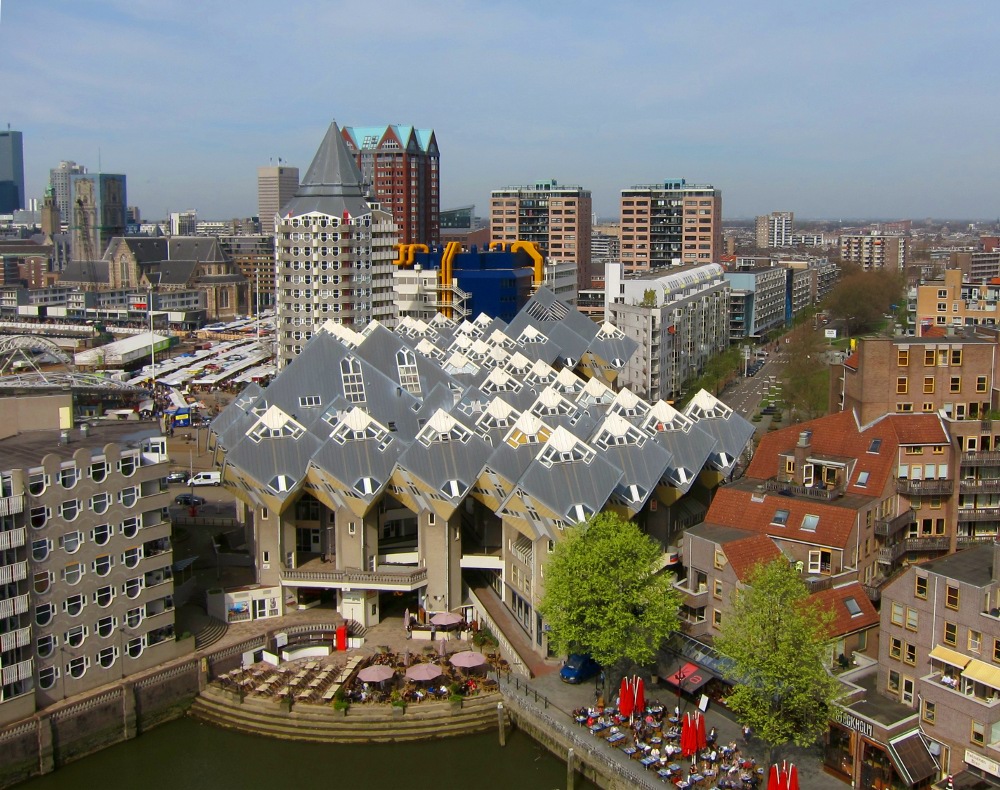
Each house (yes, they are inhabitable!) has four floors, which contain a living room, two bedrooms, a kitchen, and a small garden on the top floor. The walls and windows are tilted at an angle of almost 55 degrees to the floor. Are you ready to spend your life in such a space?
Pencil House
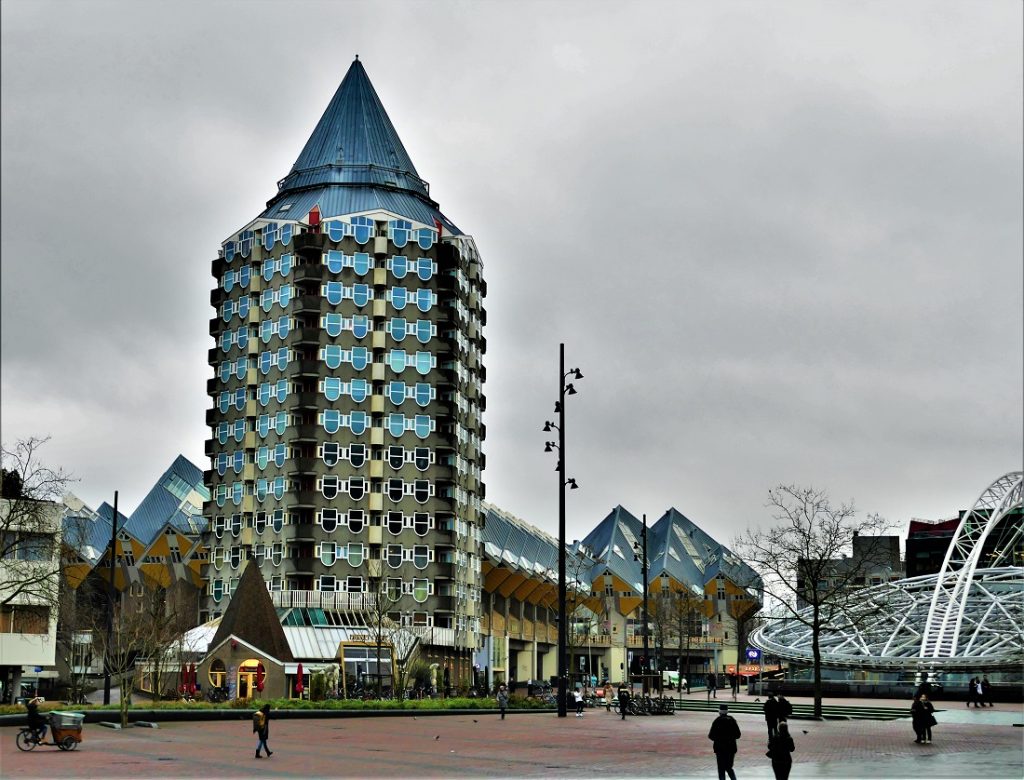
If the answer to our previous question was a resounding "no," consider a nearby residential building—a slightly less whimsical pencil house. It got its name from its pointed roof, reminiscent of a sharpened stationery item. The Dutch have ironically nicknamed the rectangular building next to the "pencil" the "eraser."
De Rotterdam
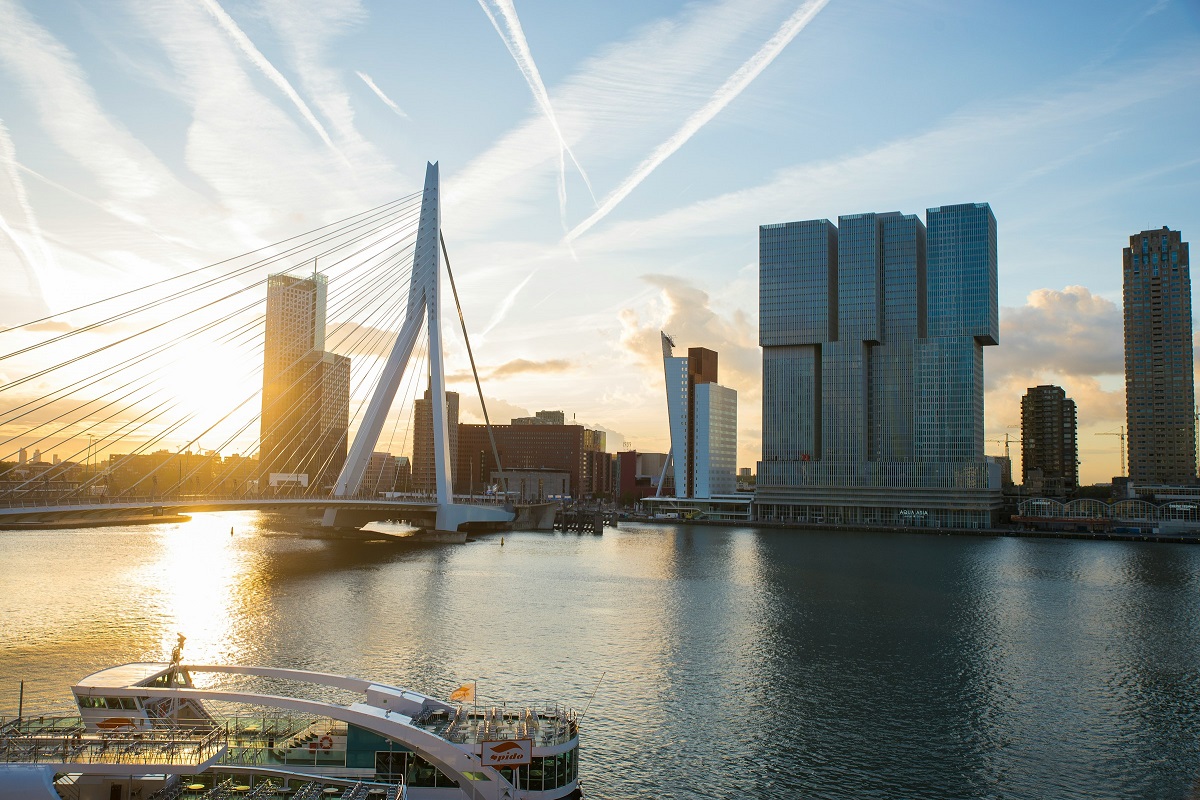
One of Rotterdam's youngest architectural gems is the De Rotterdam complex, consisting of three towers. Or four... depending on whether you count the fourth, horizontal tower that serves as a pedestal for the others. Today, De Rotterdam is the tallest building in the country (150 meters) and one of the main creations in the portfolio of the outstanding postmodern architect Rem Koolhaas.
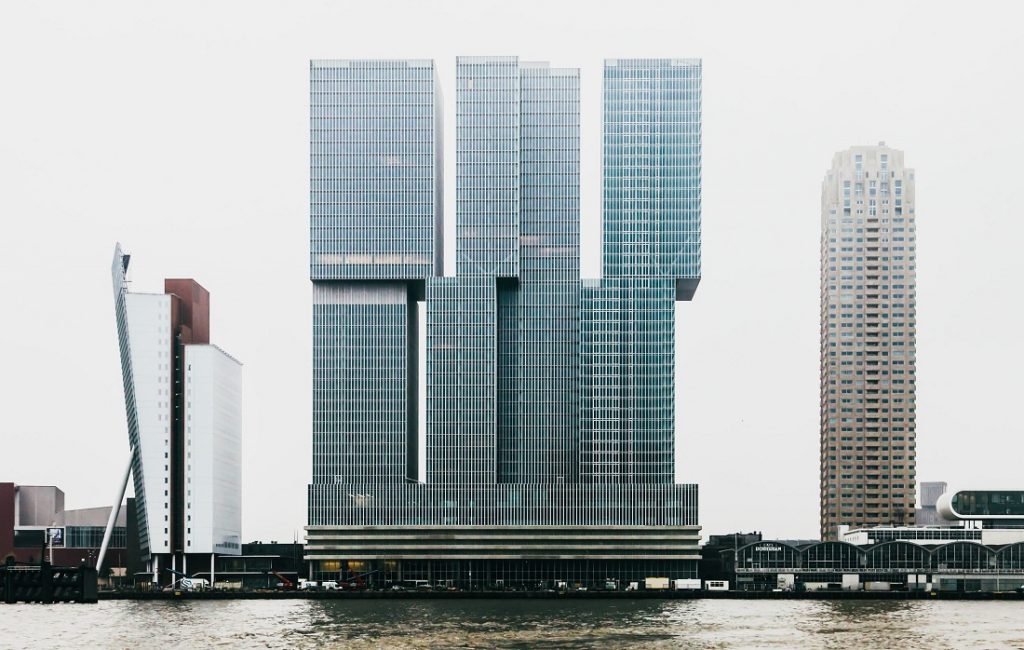
The author himself advised viewing his creation not statically, but dynamically, while driving by car. Then the interplay of light and architectural forms will fully convey the idea. At a height of 90 meters, the towers seem to have been shifted by a powerful gust of sea wind, forming giant cantilevers. Tourists can stay in one of them, where there is a hotel.
Markthal
Now you have the opportunity to compare which of the modern design schools, OMA or MVRDV, you like better. While De Rotterdam is the creation of OMA, Markthal, which opened a year later, belongs to their competitors at MVRDV.
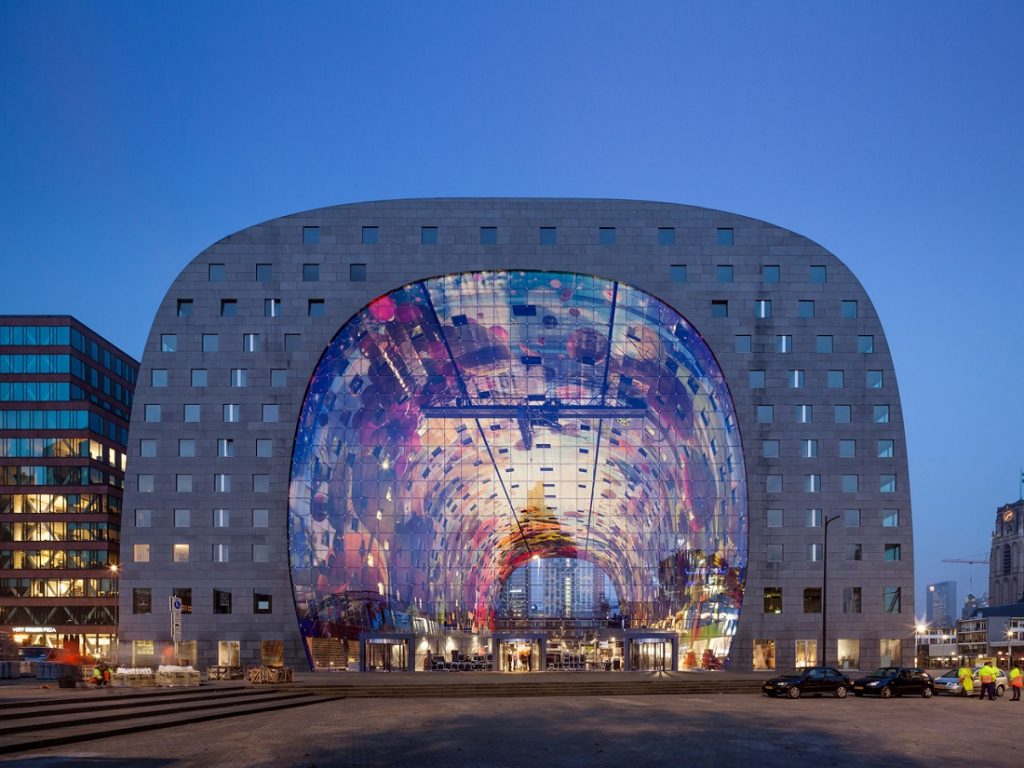
Despite its prosaic name (Markthalle translates as "market hall"), this building is a huge multifunctional complex. During the day, its arches shelter retail outlets, while in the evening they are transformed into cozy cafes, restaurants, and bistros. And above this bustling hub of life are several hundred apartments.
It is a special sight to watch the play of light in the evening through the arched openings made of glass and cable mesh. It is a real world within a world, just as the architects intended.
Erasmus Bridge
The next stop on our journey will combine modern and classical architecture, the past and the present. This is the allegorical meaning of the Erasmus Bridge, as intended by its creators. In addition to its utilitarian significance, its appearance was meant to symbolize the restoration of the destroyed city. The result is allegorical, practical, and beautiful.
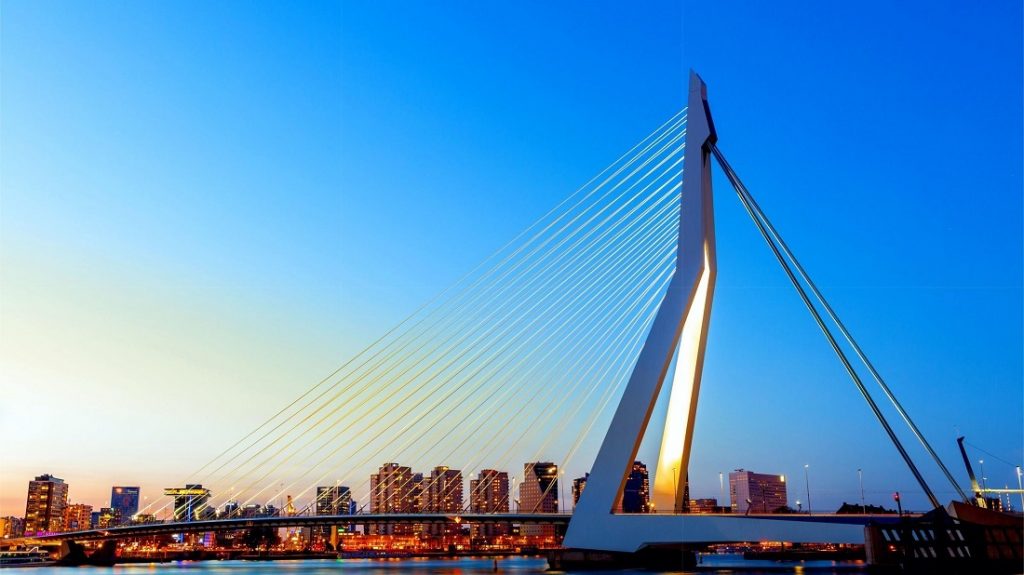
Built in 1996, Erasmus Bridge is now the largest bascule bridge in Western Europe. Its main feature is a curved 140-meter pylon, which earned it the nickname "The Swan."
Classic development
Not much remains of the city's past—a conscious, albeit controversial, choice made by the authorities. Nevertheless, several important historical buildings survived the war. Today, they embody the connection between different eras.
White House
Not Washington, of course, but Rotterdam also has its own "White House." With a different purpose and a completely different appearance. It looks more like the Plaza Hotel in New York (we wrote about the best chain hotels here), where Kevin from Home Alone stayed. The buildings are practically the same age, having been built 20 years apart, with the New World inspiring old Europe.
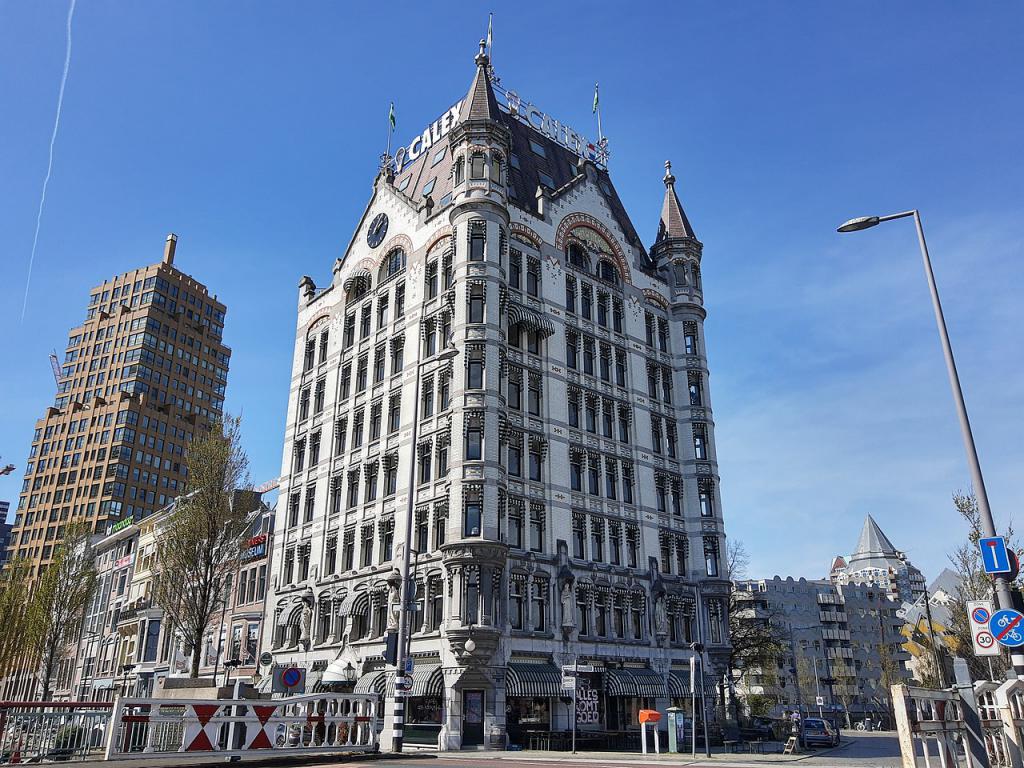
The White House, built in 1898, caused no less of a sensation than the Markthal or De Rotterdam. The Art Nouveau style, now considered classic, was a bold, if not scandalous, choice at the time. The White House also surprised its contemporaries by being built on stilts. Because of this, people were afraid to move in for a long time.
Paradoxically, the pile structure proved to be so sturdy that it withstood not only the residents, but also the carpet bombing of 1940. And today, the "ugly duckling" has turned into a "snow-white swan," beloved by local residents.
The old harbor and port
The true heart of Rotterdam is its harbor. Without it, Rotterdam would be a provincial town rather than a world-famous port. That's why we can't miss this location on our walk.
The harbor and the first port buildings appeared in Rotterdam at the same time as it was granted city status, i.e., in the mid-14th century. The residents immediately understood the advantages of the location, and the connection between the city and the sea has never been broken. It is symbolic that the Old Harbor survived even when the city was bombed by the Germans, when almost everything else was burned down.
Today, the Old Harbor is a small neighborhood, ideal for walking and finding peace of mind. The soothing murmur of the water whispers the secrets of the city's charm to tourists.
St. Lawrence Church
And where is the real antiquity, you may ask? Here it is, perhaps the only example of its kind, St. Lawrence's Church, one of the few buildings that have survived in the city since the Middle Ages.
The temple was built in the 15th and early 16th centuries in the Gothic style. It was even innovative for its time—it was the first church in the city to be built entirely of stone.
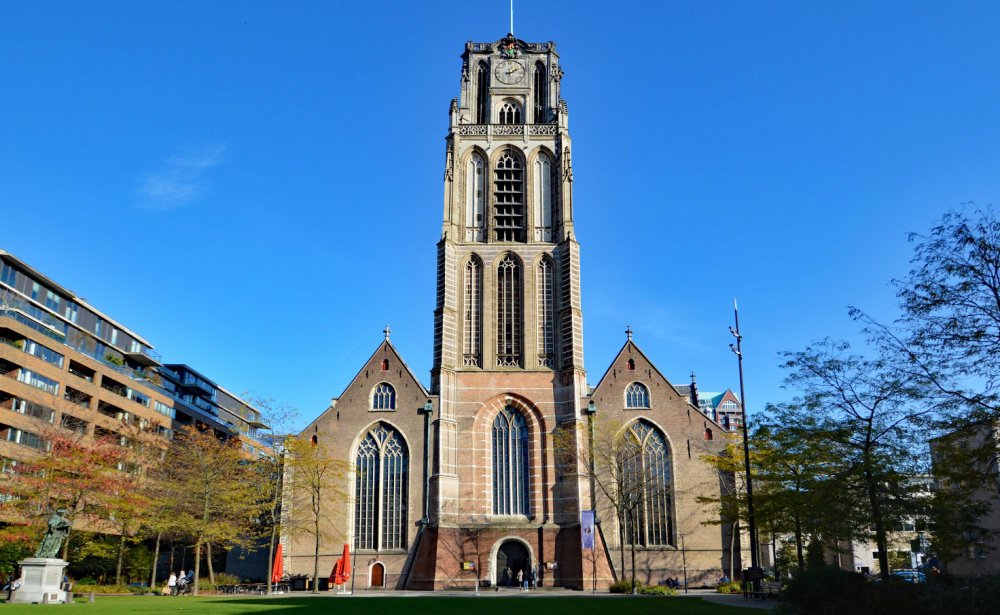
The church suffered greatly during World War II, but unlike other old buildings, it was decided to restore it. Today, St. Lawrence Church is the spiritual center of the city. In addition, it has one of the largest organsinin the Netherlands.
Museums
Port cities are usually imagined as rough and uncivilized. But that's not the case with Rotterdam. The city has plenty of places where you can enjoy aesthetics and experience art. Here are the best of them.
Boijmans Van Beuningen Museum
The most famous museum in Rotterdam, where you can admire masterpieces of world painting. The museum features works by Hieronymus Bosch, Rembrandt, Jan van Eyck, Peter Paul Rubens, Vincent van Gogh, and many other masters of the brush.
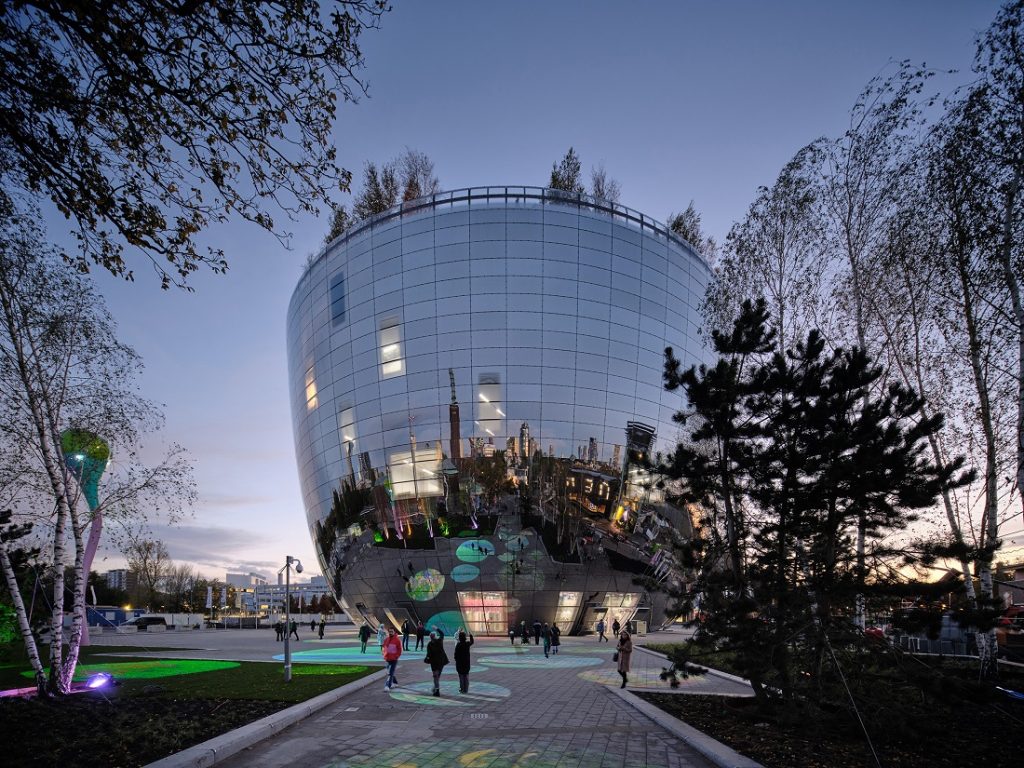
The building itself is a work of art. In the city's usual flamboyant style, the designers played on the idea of a bowl. Its mirrored cladding not only serves an aesthetic function, but also protects the exhibits from sunlight. A birch grove is located on the roof of the huge bowl.
Admission to the museum costs €20, with a 49% discount for students. Minors do not have to pay at all.
Maritime Museum
How could Rotterdam be without a maritime museum? Six centuries of the city's maritime history are embodied in 850,000 exhibits under the open sky.
The most valuable object on display is the Mataro, an accurate model of a ship that is 600 years old. It is the oldest exhibit of its kind in Europe.
In addition, the museum displays sailors' logbooks, ancient nautical charts, and, of course, real ships. The museum has a special play area for children, where they can learn the basics of seafaring.
The ticket price for adults and children aged 15 and over is €17.50. Children aged four and over pay €12.50.
Kinderday
Windmills, along with tulips, create a romantic image of the Netherlands (by the way, we wrote about the most beautiful tulip fields here). However, they were not built to please the eye. Nor were they built to grind flour. Dutch windmills are special. They were used as pumps to keep water at the right level and prevent flooding of fields and homes.
This is how purely utilitarian structures designed to combat flooding became major tourist attractions. Today, the 19 Kinderdijk mills are listed as a UNESCO World Heritage Site.
Not only are the mills themselves interesting, but so is the history of the name of this area. It translates as "children's dam." According to legend, during one of the floods of the 15th century, residents found a cradle with a cat and a peacefully sleeping baby in the water.
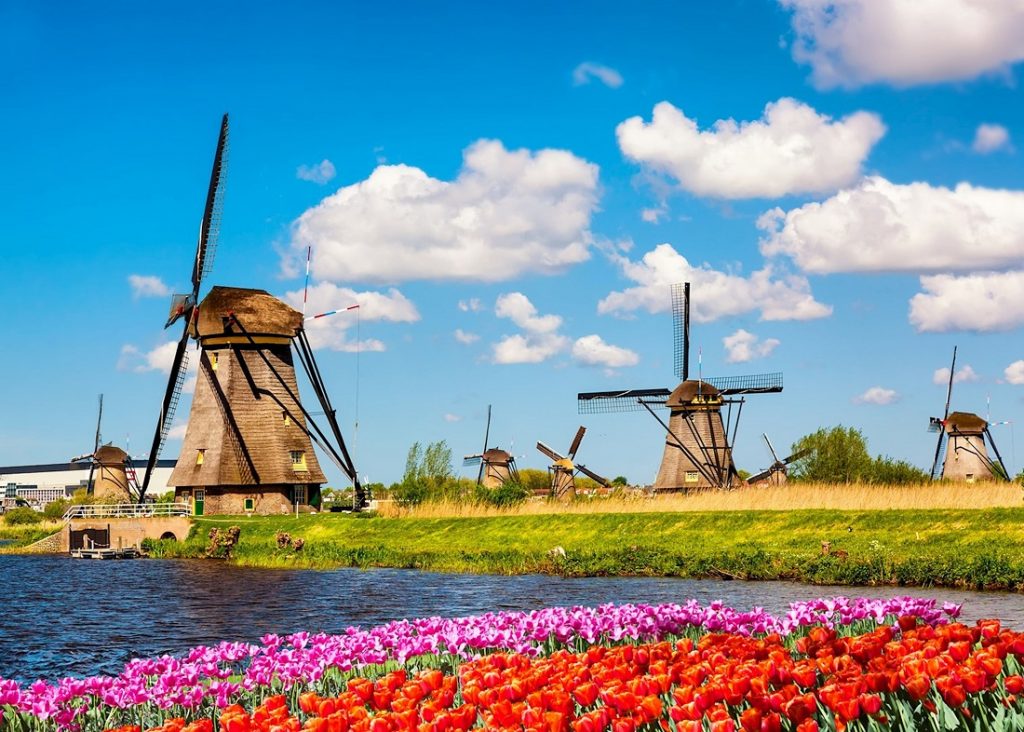
Kinderdeijk is located 15 kilometers from Rotterdam. Tickets for adults and children aged 12 and over cost €18. Tickets for children aged four and under are three times cheaper.
The whole family
Rotterdam is renowned as a "party city." Its youthful, modern style perfectly matches this status. But in addition to museums, promenades, and sightseeing, there are plenty of places for families to have fun.
Zoo
One of the oldest establishments of its kind in the country (opened in 1857), Rotterdam Zoo is home to more than 500 species of animals. Here you can encounter rare red pandas, Indian elephants, polar bears, and Komodo dragons. But the most exotic animals are the lowland gorillas and small okapi giraffes from Africa.
The zoo is divided into different climate zones for the convenience of both residents and visitors. For lovers of the aquatic world, there is an aquarium and a "crocodile river."
Admission costs €29.50 for adults and €24.50 for children.
Soccer game
Rotterdam is home to several well-known soccer clubs. The most famous of these is Feyenoord, one of the three most successful clubs in the country. Feyenoord has not only won 16 national football trophies, but also the Champions League Cup and the world's premier club trophy, the Intercontinental Cup.
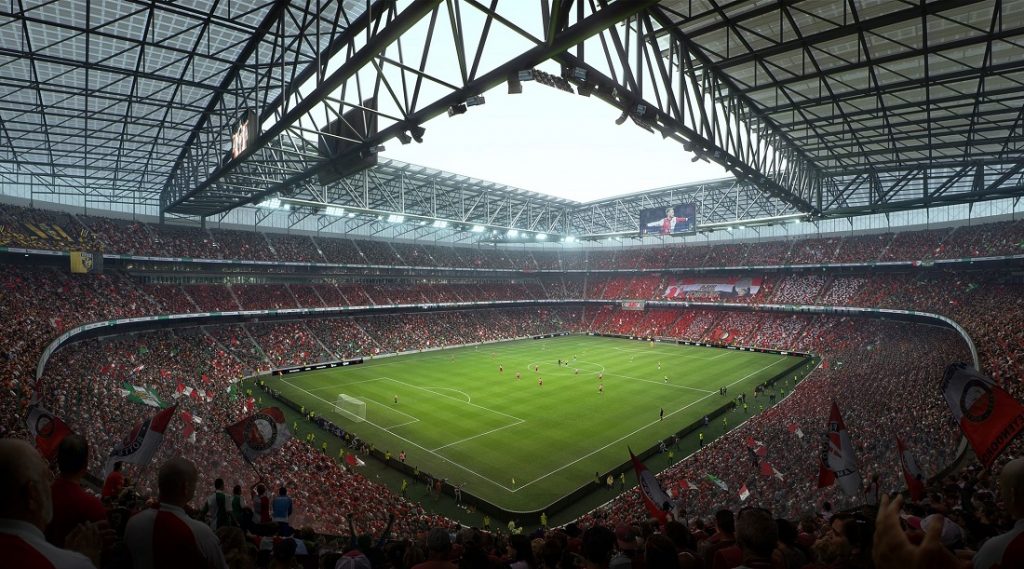
But titles aren't the most important thing. It's the atmosphere of the 50,000-seat De Kuip stadium and the crowd of fans, engulfing you in their ecstasy. Their waves of emotion are much warmer than the waves of the North Sea, which has been washing over Rotterdam for hundreds of years. But it's worth diving into both. So that when you resurface, you can say which Rotterdam you like best.