When people talk about romance in travel, France is most often mentioned. Indeed, what could be more romantic than a boat trip on the Seine, leisurely sipping wine with your significant other, and admiring the charming capital from the Eiffel Tower? But there is no aspect of life in which the Germans have not challenged their eternal rivals, the French.
And so, in the battle for romance, Germany unexpectedly decided to challenge France. In the 1950s, it created a special route along the best sights of the south of the country, the "Romantic Road of Germany." Well, let's see how romantic the German route really is and what charming places it has to offer.
Where does the Romantic Road run?
Germany's Romantic Road is a 350-kilometer route through 28 locations in the south of the country (Bavaria). Its starting point in the north is Würzburg. You will cross the finish line in Füssen, in the foothills of the Bavarian Alps.
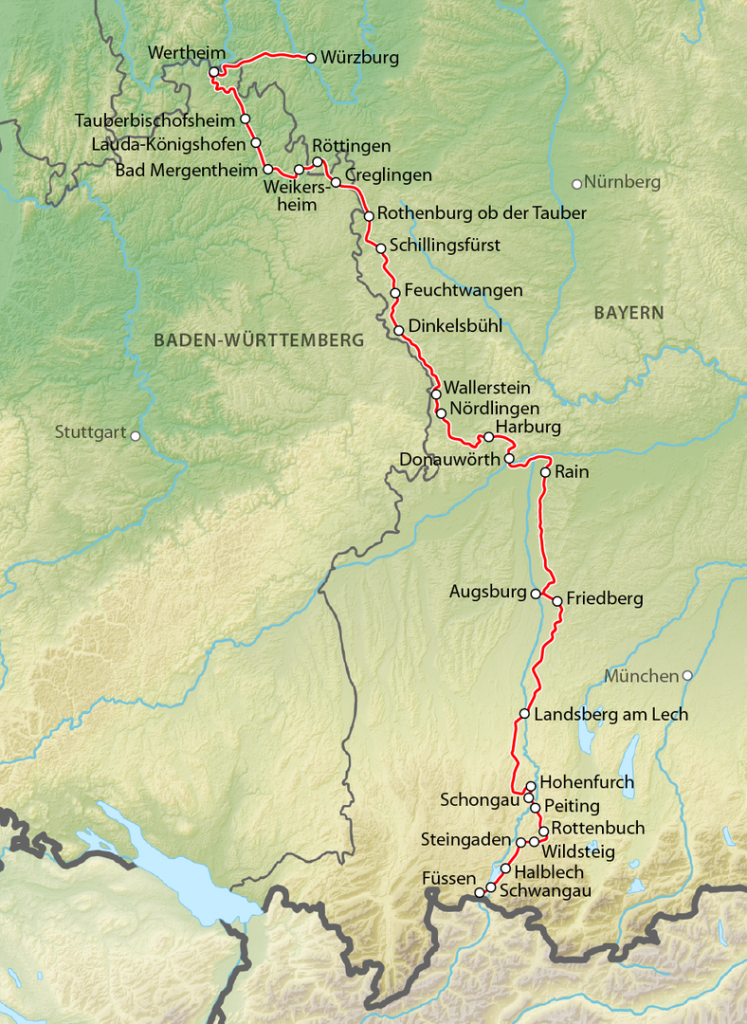
The route is wonderful because it combines enchanting natural landscapes, the valleys of the north and the mountain ranges of the south, with the best man-made wonders of German architecture, such as the Würzburg Residence and Neuschwanstein Castle. You can choose the biggest gems from this tiara of German classics to visit. But ideally, it's best to take your time and travel the entire route. And change your perception of Germany forever.
If German romanticism appeals to you, our story on how to spend your honeymoon in Germany.
How to travel along the Romantic Road
The easiest way to reach the starting points of the route in the north or south is by plane with inexpensive tickets. There is no shortage of flights to Frankfurt am Main or Munich. In the first case, you will be an hour's drive from Würzburg, and in the second, you will be closer to Füssen.
Airports also open up a wide range of opportunities. You can take advantage of specialized bus tours. You will be picked up directly from the airport and taken to the other end of Bavaria. For travelers with less time or who are more meticulous in their exploration of monuments, it is recommended to visit only a few locations along the Romantic Road rather than traveling its entire length. Prices vary from €30 to €230, depending on the route chosen and the activities along the way.
For those who enjoy independent travel and dislike being tied to a tight tour schedule, there are other ways to reach a number of destinations along the route. For example, you can take a bus ( use the extensive network of Flixbus) or by train (Deutsche Bahn).
The most convenient option would be to rent a car, for example, from Europcar. This will allow you to explore every corner of the Romantic Road without rushing anywhere. Except, perhaps, to return the rental car as soon as possible, because the prices are steep — starting at €100 per day.
Lifehacks
When planning a trip, the first question a tourist asks is: when is the best time to go? In summer, the Romantic Road looks more interesting: forests buried in greenery give way to the snow-capped peaks of the Bavarian Alps. By the way, we wrote about the Saxon Alps here. The frost will not soon drive away walks through medieval streets and parks. However, in summer, there are many tourists at the locations along the route.
Winter is a good option for those who love New Year's and Christmas fairs and performances. Germans really know how to organize them. If you can't decide which fair to go to for some festive cheer, take a special tour. February is also the perfect time for romance. The route is ideal for a trip with your significant other or (why not?) to find one among the tables in cozy cafes.
Another highlight of the trip could be wine adventures. It would be simply sacrilegious to ignore German wine tasting on the Romantic Road. After all, the road passes through one of the country's main wine regions — Franconia. Some tours are specifically designed to explore this "intoxicating" component of German culture.
If your itinerary involves a lot of train travel, here's a way to save money. Deutsche Bahn offers regional day tickets for Bavaria. The larger the group of passengers (up to five people), the cheaper the ticket per person. For example, unlimited travel in Bavaria costs €29 per day for one passenger and €69 per day for five passengers. This is ideal if you are traveling with your family.
Finally, cycling tourism has been gaining popularity recently. Cycling infrastructure is well developed both in Germany as a whole and within the Romantic Road. However, for this type of trip, we recommend traveling from south to north rather than the other way around. This way, you will be descending from the mountains rather than climbing them.
Sights along the Romantic Road
The length of your trip depends on how much time you have available. You can cover 350 kilometers in a single day. But there is little point in rushing like that. We therefore recommend that you allow at least a few days for the route. And we will tell you what you should definitely include in it.
Würzburg
Germany's Romantic Road will captivate you from the very first stop. Würzburg is one of the most majestic and beautiful cities in the country. The proud and haughty 11th-century Marienburg Fortress rises right in the middle of the Franconian vineyards, embodying the two main passions of the local knights: fighting and drinking.
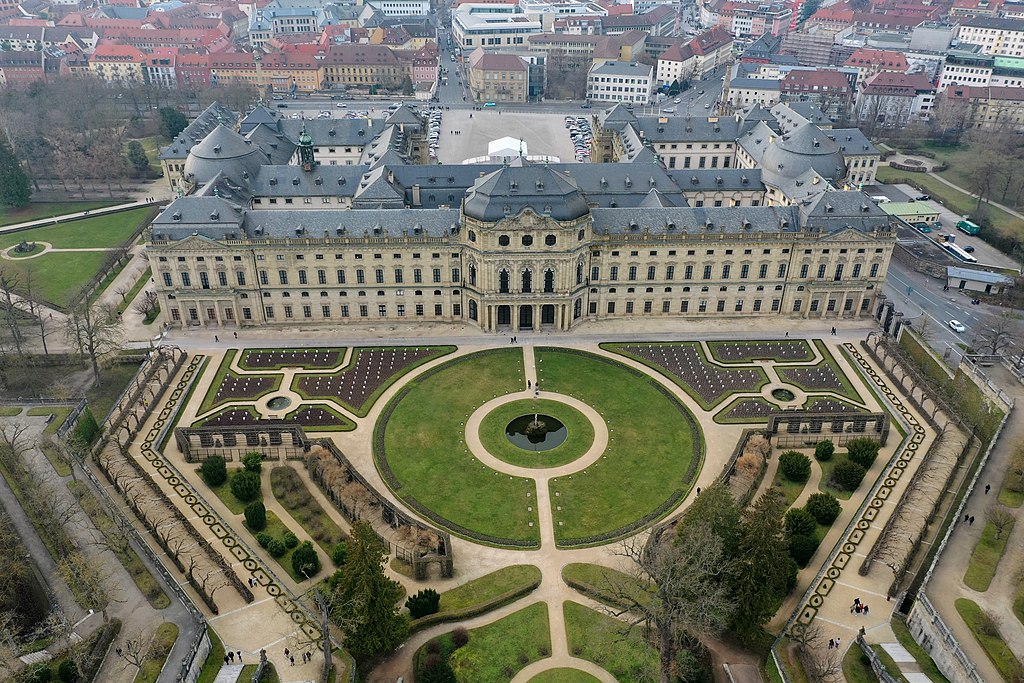
From knightly might to secular pomp: we move on to the 18th-century bishop's residence. It is the city's calling card, its 167-meter facade adorning most postcards and souvenirs. It is no surprise that the townspeople are so proud of their landmark. The bishop's residence was the first secular building in Germany to be awarded UNESCO World Heritage status. And on the ceiling of the residence, you will find one of the largest frescoes in the country.
No visit to Würzburg would be complete without admiring the majestic architecture of the local churches. The oldest is considered to be the 11th-century Romanesque St. Kilian's Cathedral. However, it was rebuilt from ruins in the mid-20th century. Be sure to visit the Market Square with its 14th-century Church of the Virgin Mary.
Vikersheim
Or little Versailles. Rivalry with France again!
The official website of Waikersheim promises: "You will be enchanted." And it is not lying. The ensemble is a case where external beauty matches internal beauty. The large park, together with the garden and greenhouse, may not rival Versailles, but it will make you want to spend hours wandering under the canopy of centuries-old trees, soaking up the spirit of the Renaissance and Baroque eras.
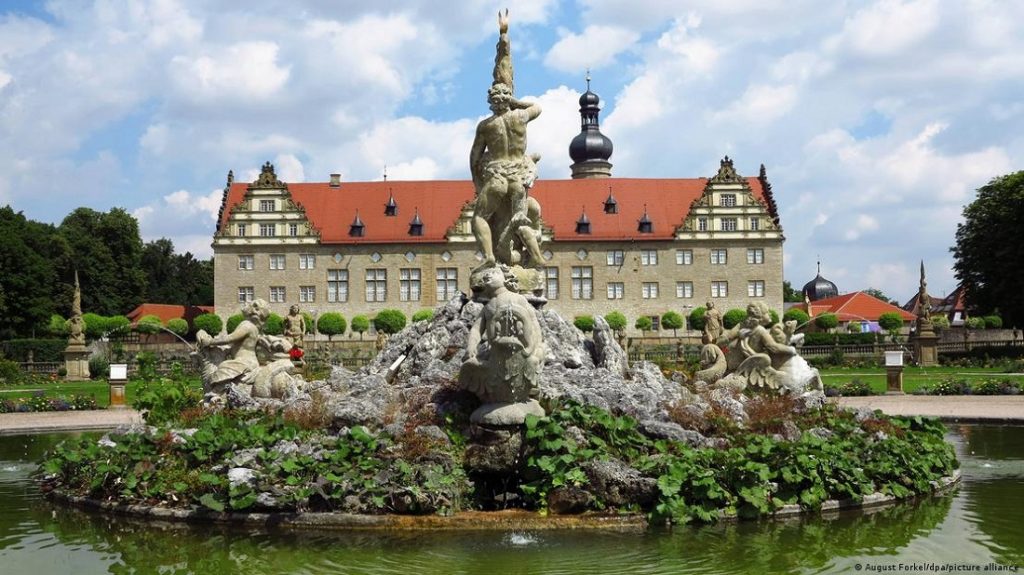
The castle is famous for its knight's hall, decorated with hunting scenes, life-size animal figures, and a coffered ceiling with genre paintings. A moment of mysticism: at one time, there was an alchemist's laboratory here.
Rothenburg ob der Tauber
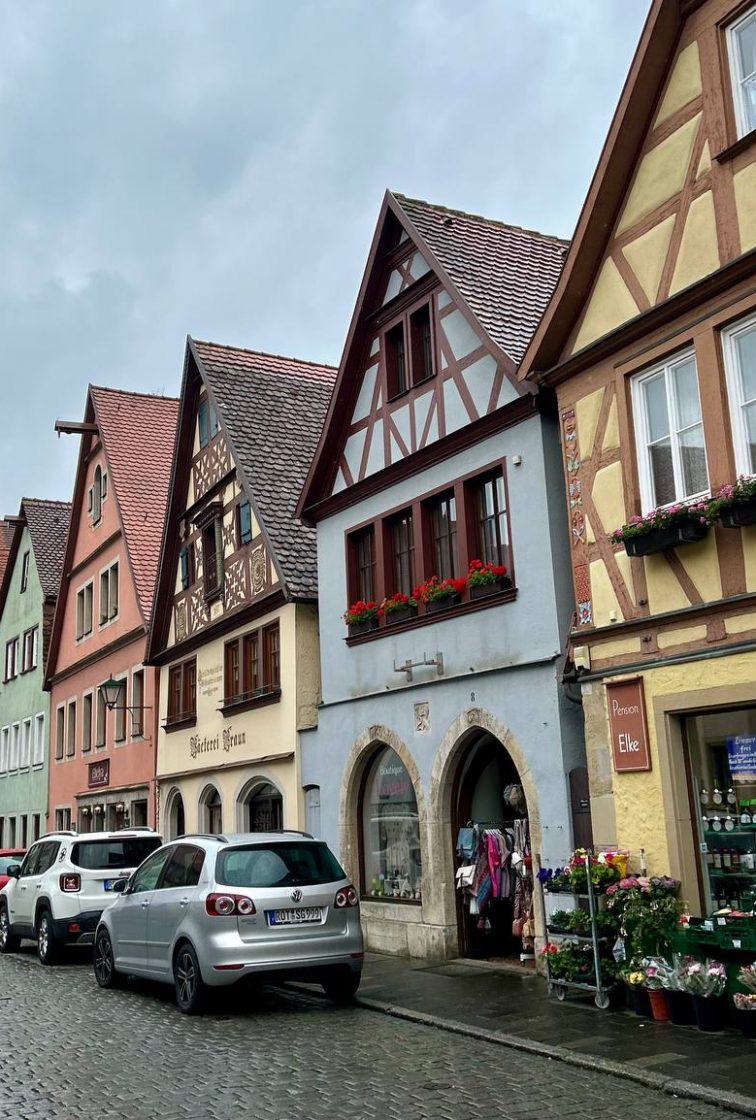
Even cautious and reserved diplomats officially have dubbed Rotenburg ob der Tauber "the most romantic city in Germany." Attracted by this label, three million tourists visit the city every year, which has a population of only 11,000!
Rothenburg ob der Tauber is one of the few German cities where the medieval city wall with towers has been completely preserved. Perhaps it is thanks to this, or perhaps it is due to the careful attitude of local residents towards their cultural heritage, that the city has a medieval atmosphere.
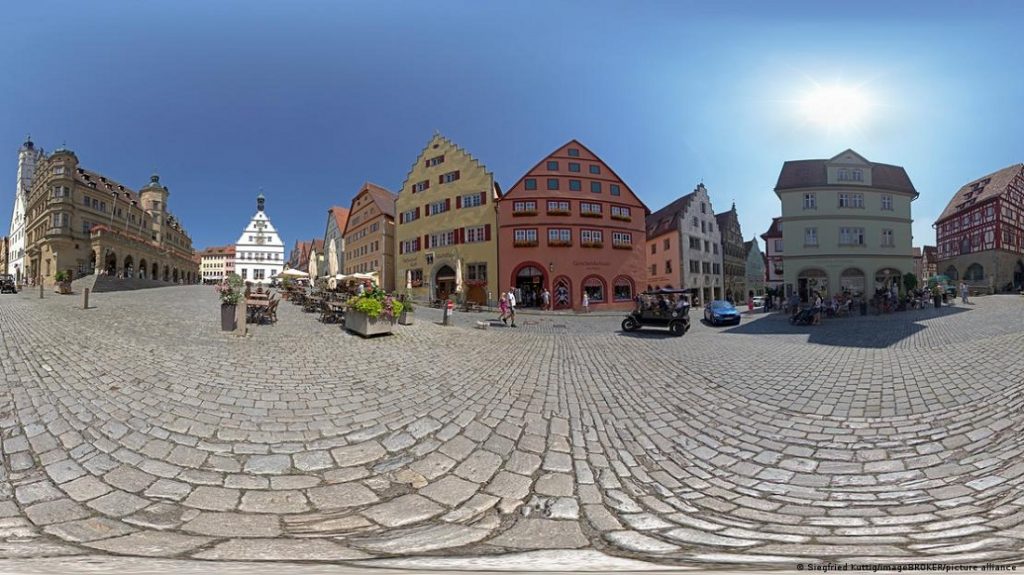
Interestingly, the city's main attraction and atmosphere of the past might not have existed. According to legend, in the 17th century, during the Thirty Years' War, the city was captured by the Catholic army. The commander of the victors was presented with a three-liter cup of wine in a tavern. He proposed a bet to the burgomaster of the conquered city, Georg Nusch: if Nusch drank the jug of wine in one gulp, Rothenburg would not be destroyed. If only the Germans didn't know how to drink... thought Nusch, and drained the huge container. Thanks to this feat of alcohol consumption, the city survived, and since then, a theatrical festival called Meistertrunk has been held there.
In addition, scenes filmed in Rothenburg were supposed to be included in the movie "Harry Potter and the Deathly Hallows." However, for some reason, the director did not utilize the city's ideal medieval scenery. This caused great sadness among the residents.
Dinkelsbühl
Another striking example of medieval spirit on the Romantic Road. Looking at the panorama of the city, one does not even want to list its attractions. After all, it is a complete ensemble in itself, creating the right atmosphere with the triangular roofs of colorful gingerbread houses, cobblestones that have seen millions of feet, and 16 preserved medieval towers.
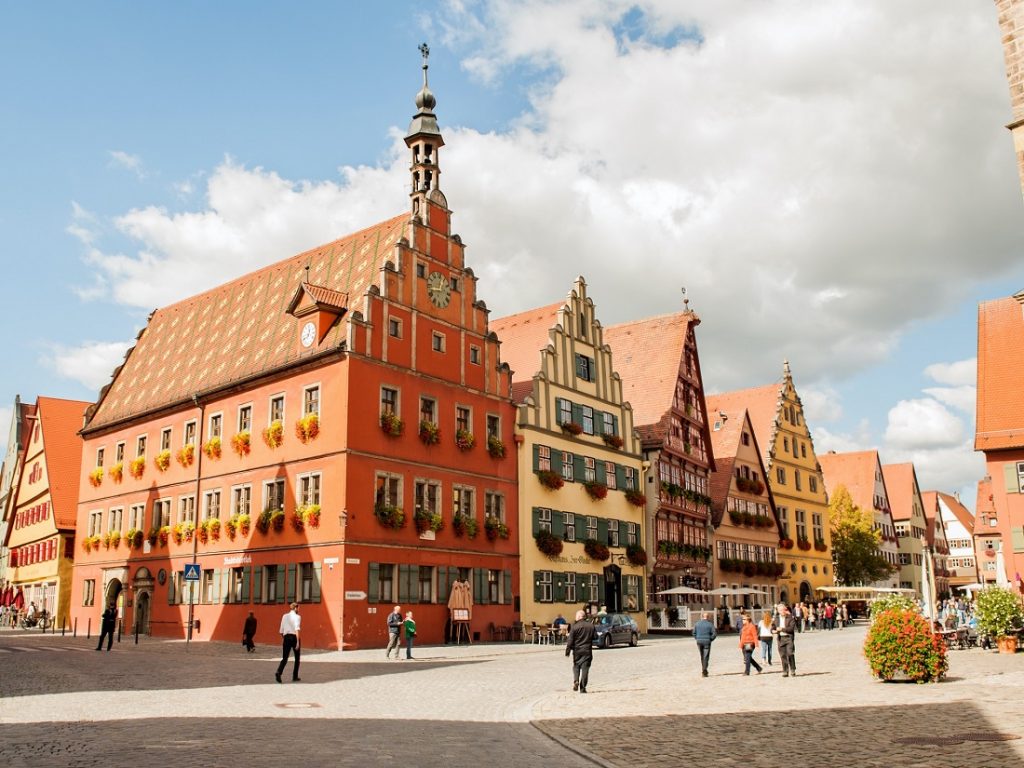
Its distinctive feature is that the administration has meticulously preserved the old part separately from the new city districts. And rightly so: there is no need to mix classicism with architectural decadence. Moreover, the "old town" has remained squeezed into the medieval wall and is almost completely surrounded by it. Therefore, using Dinkelsbühl as an example, we can see what the city looked like in the Middle Ages.
Every summer, the city hosts a costume performance called Kinderzehe. It is held for a strange reason, it must be said: in honor of the surrender of Dinkelsbühl to Swedish troops during the Thirty Years' War.
Neuschwanstein
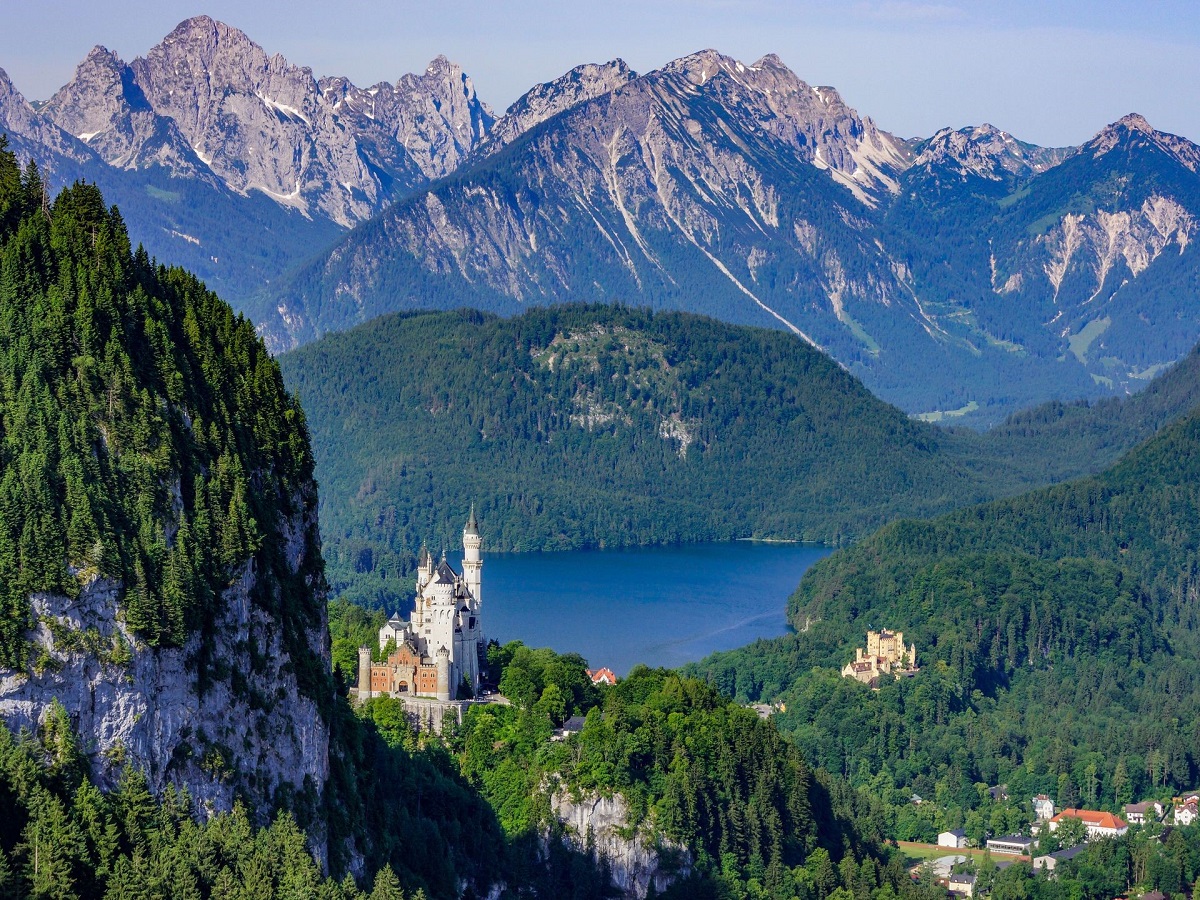
According to composer Richard Wagner, Neuschwanstein was built in the style of authentic knightly castles. However, Ludwig II, the Bavarian ruler who built the castle, had his own opinion on this matter. The castle's soaring towers are no match for the heavy and massive walls of medieval classics. Neuschwanstein stands out among German castles like a dapper dandy at a Soviet Komsomol meeting.
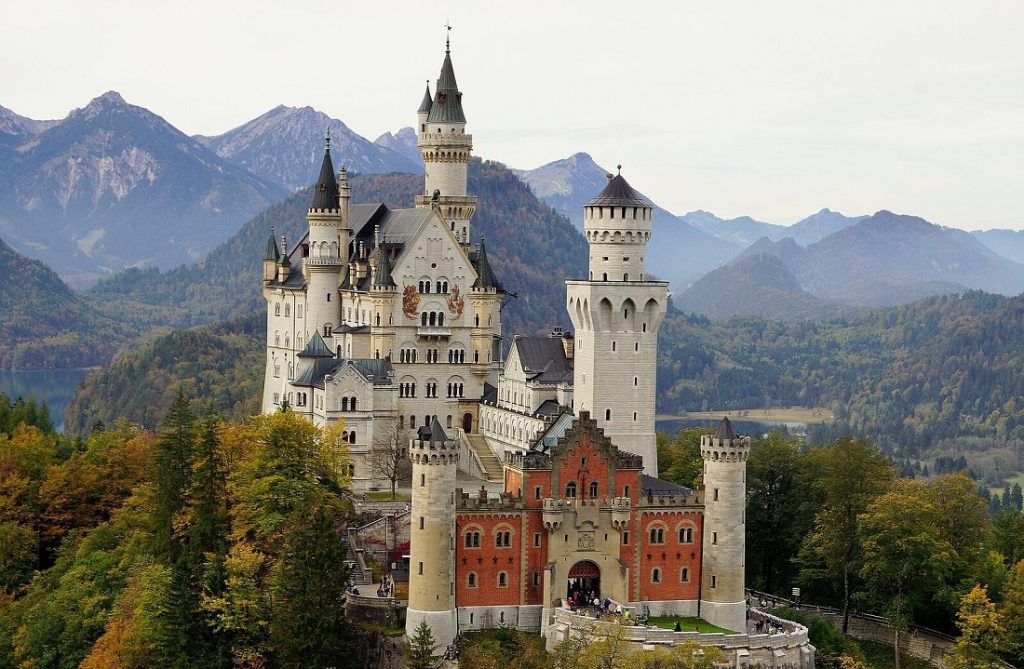
From its earliest days, this marvelous castle attracted crowds of admirers. Ultimately, it was their donations that helped complete its construction. The castle's fame has not faded over the centuries and is now actively supported by the Disney film company. Yes, Neuschwanstein was the inspiration for the castle in Sleeping Beauty. And that, in turn, is featured on the company's logo.
It is worth spending €17.50 on a ticket to see the building's magnificent interiors. Illustrations for Wagner's operas and ancient German legends play a key role in them. And, of course, swans (Neuschwanstein translates from German as "new swan stone").
Piligrimos has compiled a a selection of other magnificent German castles that you will want to visit.
And also...
One of Europe's most stunning medieval castles towers over Harburg. The area itself is a veritable treasure trove of antiquities. Exhibits and buildings from the Roman Empire, ancient Germanic tribes, and medieval princes have been preserved here.
You can delve even deeper into the past in Augsburg, a city with two thousand years of history, one of the oldest settlements in the country. Tourists are particularly attracted to the old town hall and its richly decorated golden hall, the Cathedral of the Virgin Mary, and the Basilica of Saints Ulrich and Afra. But it is also worth stepping away from the sublime to the mundane. Augsburg is home to Fuggerei, the world's first social housing district. It was founded in 1516. Those wishing to receive shelter here had to have lived in Augsburg for at least two years, be Catholic, and find themselves in poverty through no fault of their own.
After the hustle and bustle of the city, come to Wildsteig, a small mountain village, for solitude and relaxation for the soul. Those who want to be in nature turn off the Romantic Road here. The picturesque foothills of the Alps and lakes will undoubtedly contribute to this.
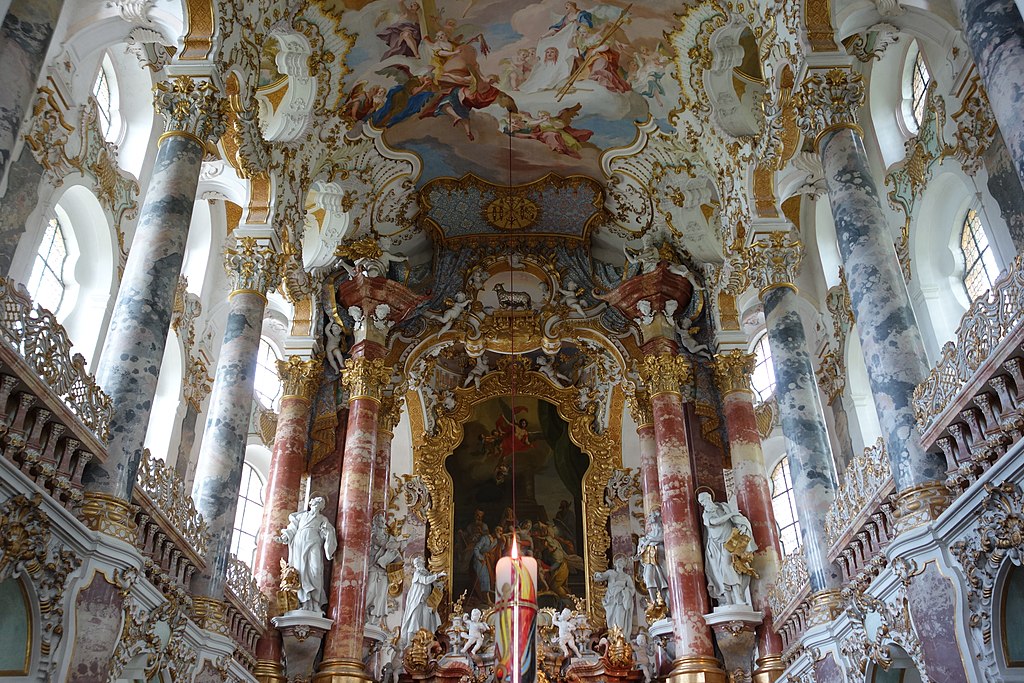
The nearby Wiskirche church is an excellent addition to Wildsteig. It has been recognized as one of the world's most important Rococo monuments and is listed as a UNESCO World Heritage Site. But words pale in comparison to the sight of the intricately painted ceiling and walls.