Transylvania has long been one of the most attractive and, importantly, affordable tourist destinations for Belarusians. Vampire mysticism, Gothic architecture, gloomy mountains guarding it from the outside world – a wonderful preview that adorned travel brochures. Its accessibility has disappeared in recent years. But its alluring charm has not gone anywhere. What creates it in the case of Brasov? Let's find out.
How to get there?
First, let's talk about the practical stuff: how do you get to this vampire corner of Europe? A few centuries ago, this was a tricky puzzle for travelers because of the region's mountainous terrain. Today, it's pretty easy. You'll most likely be heading to Brașov either from Bucharest, the capital of Romania, or from neighboring Hungary.
Train
If the first option is relevant for you, I recommend using Romanian railways — CFR Calatori. You can buy tickets online on their website. But be sure to turn on your VPN, otherwise the website will not open for users from Belarus. There are many trains, departing literally every hour. The journey from the Romanian capital to Brasov takes 2 hours, which will fly by thanks to the beautiful views from the window. The ticket price is €10-11 (2nd class).
It is quite possible that your trip to the capital of Transylvania will be from neighboring Hungary, as was the case for me. There are also several trains running between Budapest and Bucharest, operated by the Hungarian side. This includes a night train. If you decide to use this option, it is worth thinking about buying tickets in advance, as trains between the two countries are in high demand. You can buy a ticket on the website of the Hungarian carrier MAV (be patient, as the interface is inconvenient). The cost is €50-55 (as of 2022).
However, I hasten to dispel the illusory convenience of the night train. You won't be able to "lie down and sleep." There are no couchettes here, only seats, albeit comfortable ones. Bright lights burn all night long in the carriage. After crossing the border, noisy Romanians continuously board at stations. On top of that, for reasons I cannot comprehend, the conductors on the train change every two hours, walking around and checking tickets over and over again. The only bonus of such a trip is the unbeatable views of the Carpathians.
Bus
Therefore, when traveling from Hungary, despite my dislike for this carrier, I still recommend using Flixbus. There are night and day routes, and if you're lucky, you can buy a ticket for €30.
Airport
Since 2016, Brasov has had its own airport, but it is only possible to fly there from a very limited number of cities. Wizzair only flies there from Dortmund and London, and other airlines are excessively expensive.
Brasov — general information
Brasov is a city where, according to popular Romanian opinion , "Transylvania begins." Transylvania is one of the three historical regions of Romania, along with Wallachia and Moldavia (not to be confused with Moldova). However, the Hungarians will be offended by this. After all, many of them are convinced that Transylvania is an ancient Hungarian land. Oh, this "ancientness." The division of Transylvania has provoked many conflicts between the two countries. And it has spilled a lot of blood, not by vampires, but by people.
There is certainly something to share. Transylvania is vast. It stretches from Alba Iulia in western Romania to Brașov in the east. Who would refuse such a tempting morsel, beloved by tourists? Historically, the principality of Transylvania was ruled from Alba Iulia, sometimes from Sibiu. But today, the capital of the region is Brașov.
It is believed to have been founded in 1211, when the Kronstadt Fortress was built. However, this is not the fortress that protects the approaches to St. Petersburg from the Baltic Sea, but a Romanian one. The flashbacks to Eastern Europe will continue when you learn that the fortress was founded by... the Teutonic Knights, also well known to Belarusians. If Brasov seems distant and foreign to you after that, how will you feel when you learn that one of Brasov's sister cities is... Minsk!
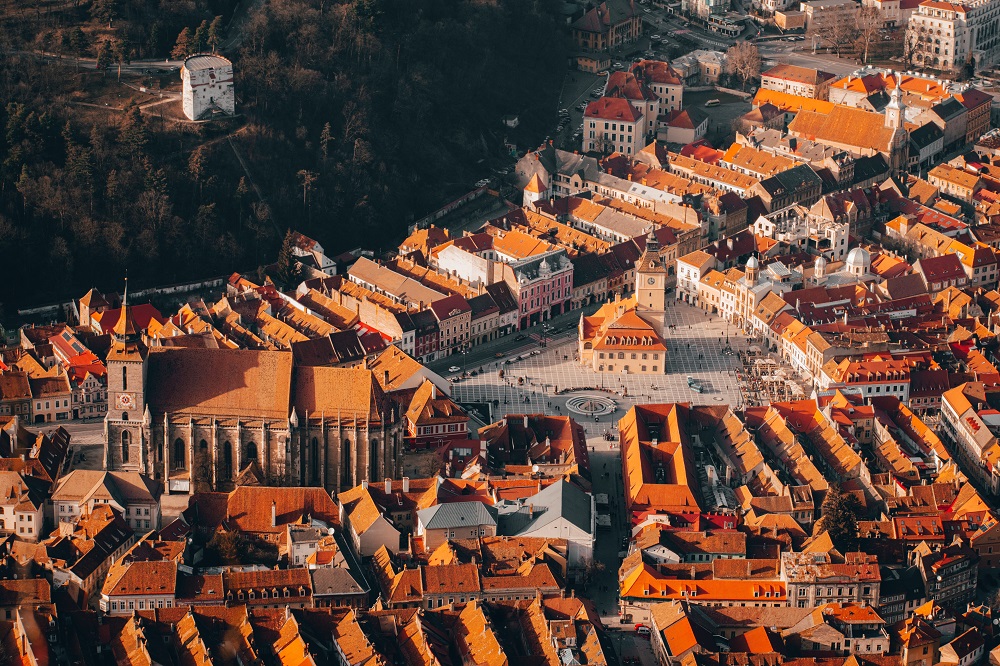
What to see in Brasov
Brasov is one of Romania's ten largest cities, both in terms of population (around 280,000) and its significance in Romania's past and present. Some call the city the "Romanian Salzburg." However, I prefer not to compare two completely unique cities, but to see the authenticity of each of them.
In Brasov, this authenticity is abundant. Some will find a connection with Scandinavia in its views, others will truly capture Alpine features, and still others will see in the restrained pathos of the historic quarters a similarity to the pre-revolutionary architecture of imperial Russia. And, of course, the scars of communist architecture will not allow us to forget what period Romania has recently gone through.
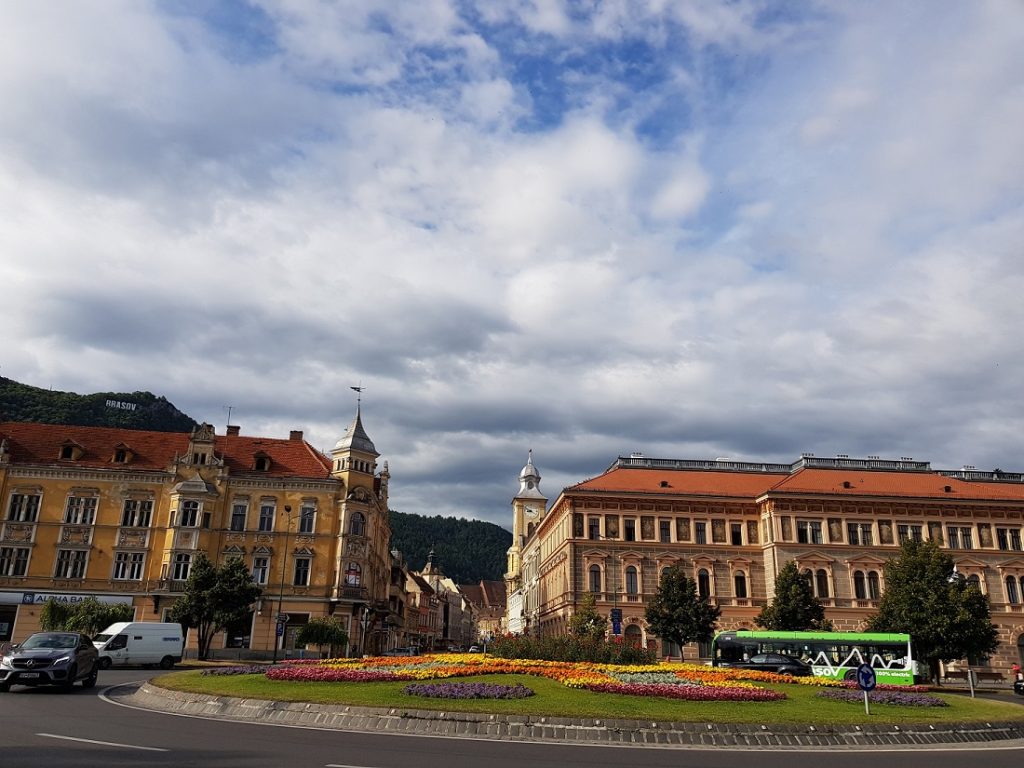
This eclectic mix is what makes Brasov unique. Unlike Bucharest, Brasov does not look like Frankenstein, awkwardly cobbled together from different parts. These combinations look organic and natural. But we will highlight the gems from the general number.
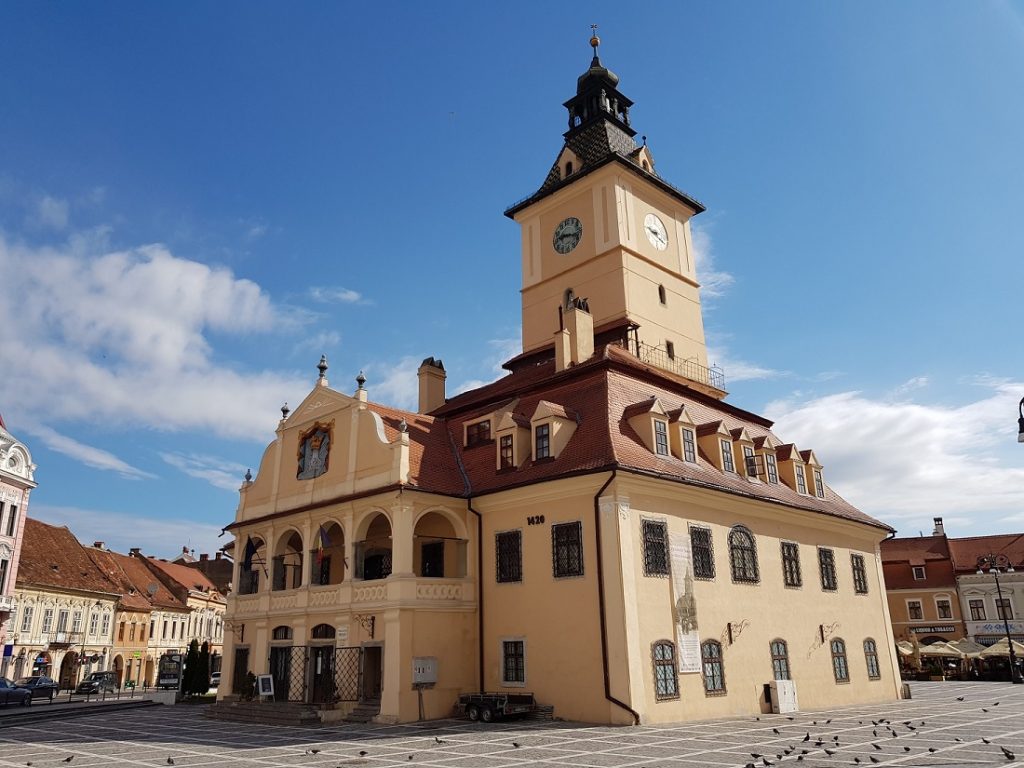
Market Square and Town Hall
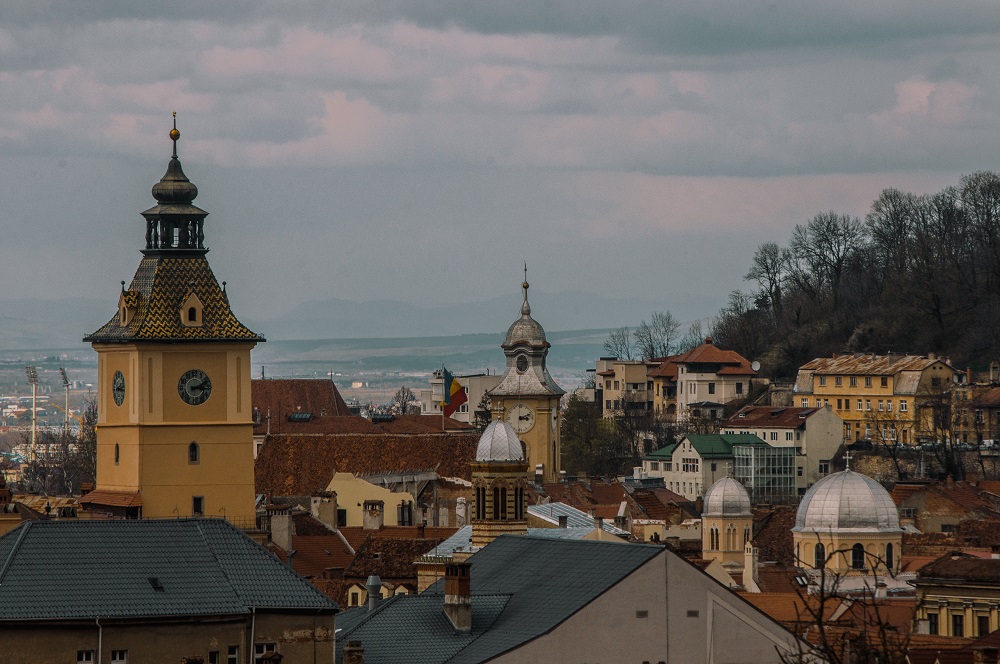
The main tourist attraction in Brasov is the market square and the Town Hall. This example of Baroque architecture was built in the 15th century, and a century later, the 48-meter-high Clock (High) Tower was added to it. In the Middle Ages, the tower served as a guard tower, which is why it was called the Watchtower. Such a grandiose building for its time was not built for idle admiration, but for specific functions — the Town Hall housed the city council (magistrate) that governed the city. Today, it houses the city's historical museum.
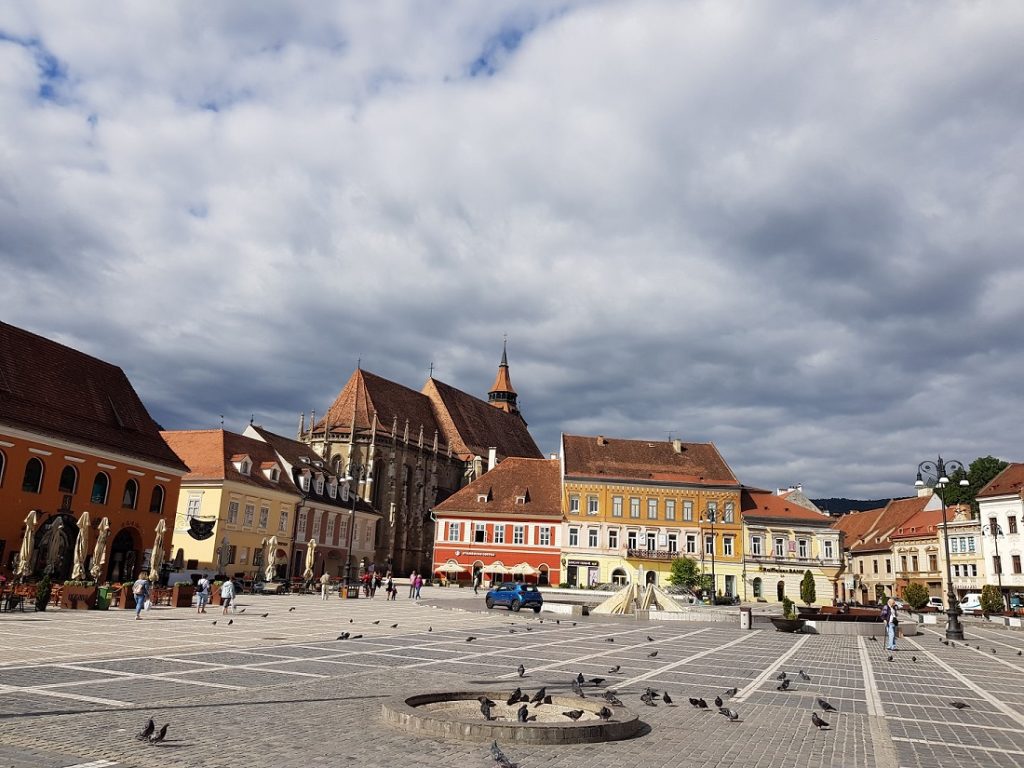
Creating a very cozy and picturesque space, the Town Hall is framed by a series of buildings of the same age. Here you will find shops, hotels, and cafes. Together, they make up Market Square or City Council Square.
Mount Tyma
This is one of Brasov's landmarks, which you will definitely notice when you are in the Market Square. The landmark is the word "Brasov" written in large letters on a densely forested slope. You can climb the mountain either on foot or by funicular (costing around €5 in 2022).
If you decide to play mountaineers, calculate your strength. After all, the mountain reaches a kilometer in height. Be especially careful in winter, as tourists on forums complain about slippery surfaces, poor infrastructure for climbing, and the imminent danger of rolling downhill. The mountain offers a beautiful view of Brasov, but if you are limited on time, I do not recommend spending an extra hour or two for it.
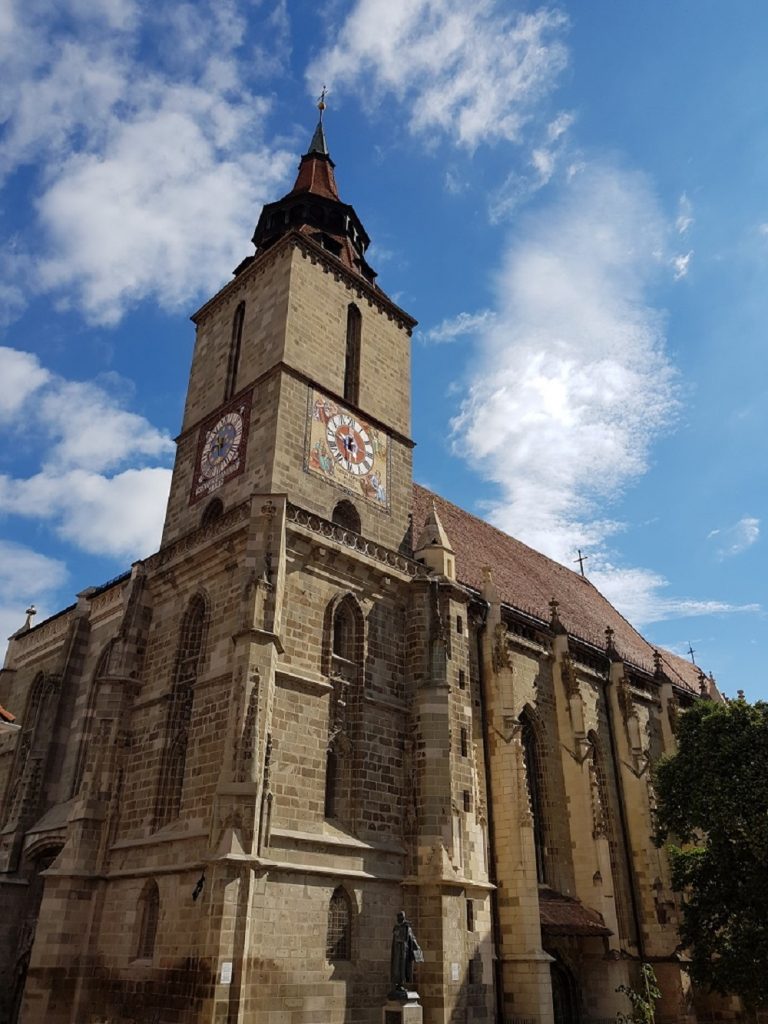
St. Mary's Church ("Black Church")
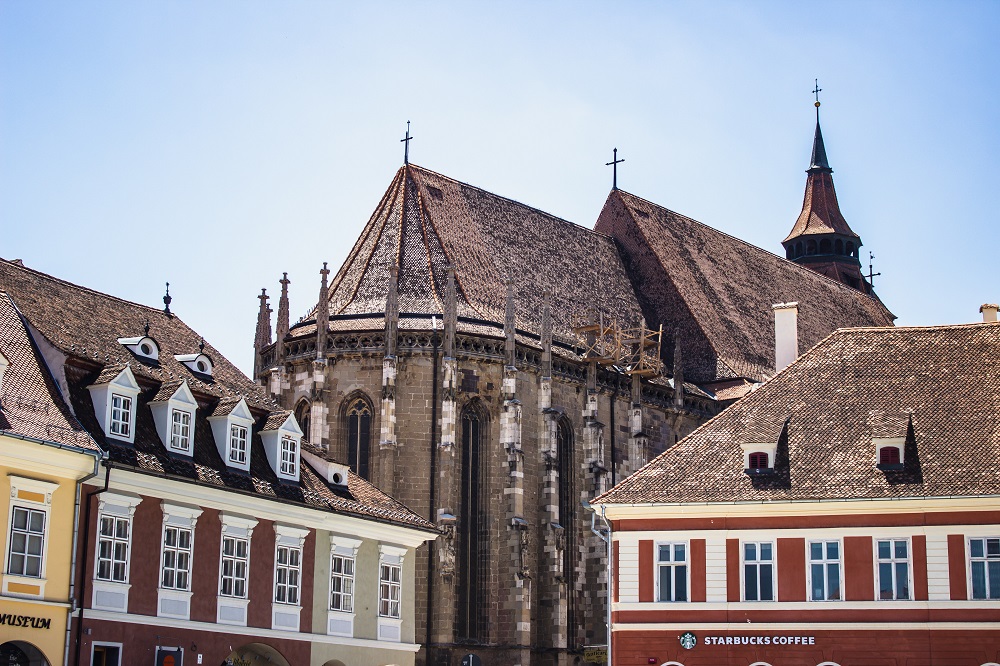
One of the most significant, striking, and memorable monuments in the city. It embodies a symbiosis of different eras and styles. The church was founded in 1383 on the foundations of a previous building. During the Reformation, the building passed from Catholics to Lutheran Protestants. Its "dual nature" is complemented by an unofficial history that is much better known than the official one.
The church was named "Black" because of a fire in 1689 that largely destroyed the temple. It was rebuilt, of course, but with significant changes. The original style acquired many Baroque decorations that were so dear to the residents of Brasov.
There is another reason behind the church's gloomy name. According to legend, during construction, a German boy annoyed the workers by repeating that one of the walls was leaning. The builder threw the child from the tower and then walled up his corpse in the church to hide his crime.
From legends to facts. St. Mary's Church is the largest Gothic building in Romania. It towers over the city at a height of 65 meters. At its top is a 6-ton bell, which is also the largest in Romania. The church also has an organ with 4,000 pipes, created in 1839. Sometimes you can hear it during "organ evenings." Tickets for these evenings, as well as for viewing the interior of the church, are paid. A visit to the "Black Church" will cost about 3 euros (price for 2022).
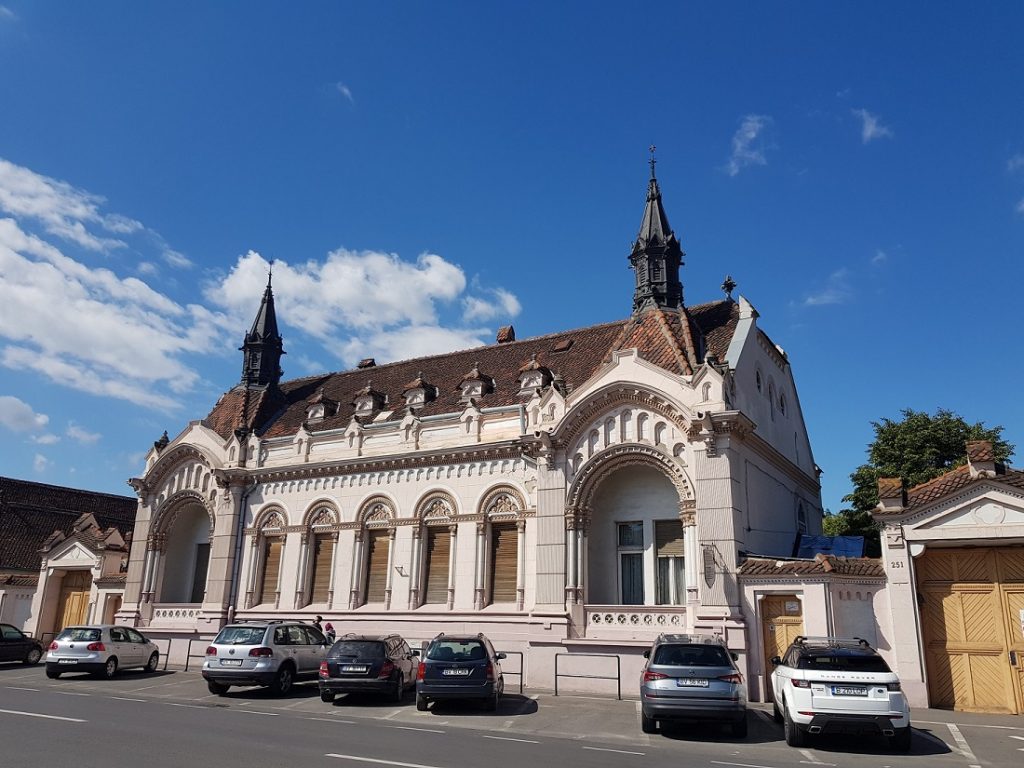
Church of Saint Bartholomew (Varfolomey)
On your way to one of the attractions near Brașov, Bran Castle, you will find yourself very close to a little-known but very valuable architectural structure—the Church of St. Bartholomew. It is located away from the historic center and the main tourist attractions. But it is worth visiting—after all, it is the oldest building in the city!
Its construction dates back to 1223-1260. Once again, it is Gothic, but without the later Baroque additions. And once again, it is a Catholic church that converted to Lutheranism during the Reformation. According to historical chronicles, the church was once surrounded by full-fledged fortress walls. Now, only symbolic, fake walls remain.
There is a cemetery on the church grounds, which gives the visit a special atmosphere. However, getting inside the church is a big problem. Services are not held at St. Bartholomew's Church. Tourists are allowed in, but only if they are lucky. The church is often closed, and it is only possible to view it from the outside.
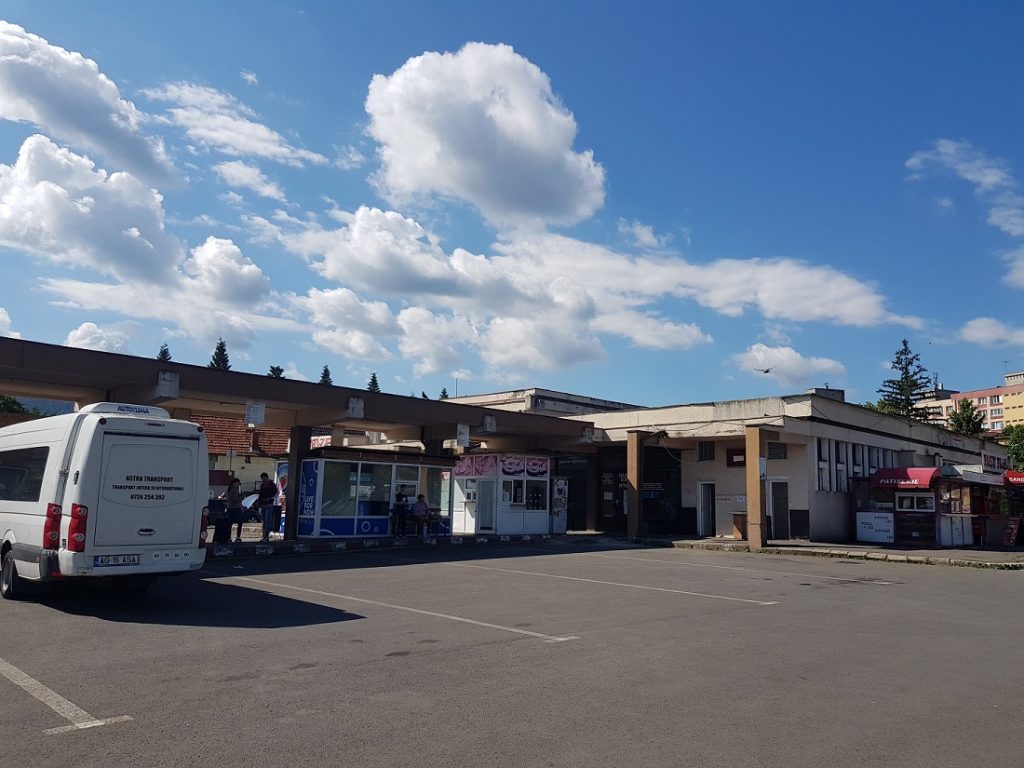
This is a pretty good express option to pass the time if you are heading to Bran Castle. Buses depart from bus station 2 (Autogara 2 in Romanian). The church is located 500 meters from this "unique logistics facility," which in itself is worthy of being the subject of our review. After all, you won't find such striking Soviet architecture even in the most remote parts of Belarus.
- In pursuit of vampires: we go to Romanian Bran
- Lebanon - an oriental fairy tale amid the fires of rebellion
- What to see on the way from Lisbon to Porto?
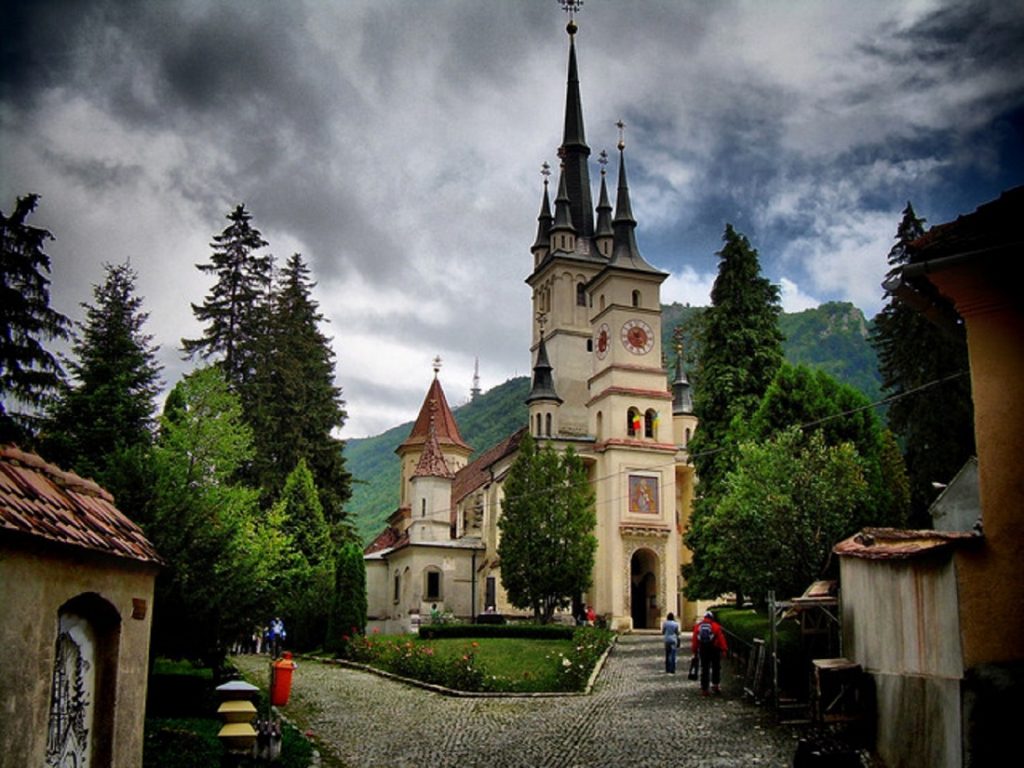
Church of St. Nicholas
This church concludes our overview of the city's religious buildings. It brings "religious tolerance" to your sightseeing tour. After all, it belongs to the Orthodox denomination. Strangely enough, surrounded by so many Lutheran churches, we are only now remembering Orthodox Christianity. However, 86% of Romania's population consider themselves Orthodox, and the country has its own autocephalous Orthodox Church.
As for the church itself, it is also one of the oldest buildings in the city. The first Church of St. Nicholas was built in 1292 using perishable wood. Therefore, after two centuries of turmoil and cataclysms, it had to be rebuilt in stone. Interestingly, this was done with the support of Vlad IV, the ruler of Wallachia and son of Vlad Dracula.
From an architectural point of view, the building has undergone the usual metamorphoses. First, it was Gothic, which is very unusual for Orthodox churches. Then the church was rebuilt in the beloved Baroque style, which is only slightly more familiar to Orthodox Christians.
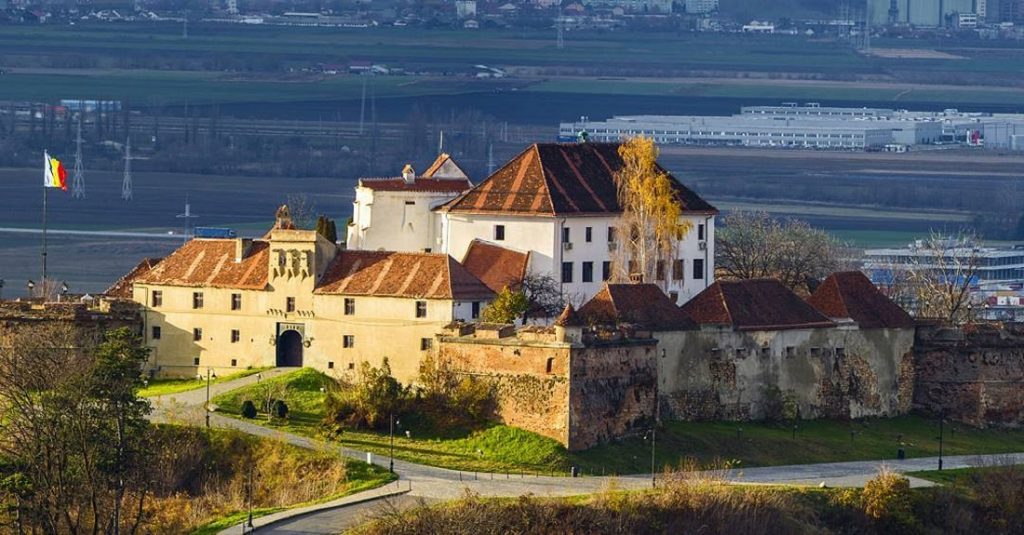
Chetetsuya Fortress
The land of Brașov is famous not only for its churches. The city has preserved a large number of fortifications from different eras. One of these structures, the Chetcuia Fortress, is located away from the historic city center. If climbing Timpu is not enough for you, then feel free to head to another hill that shelters these defensive structures.
The Chitetsuya Fortress was built in the 16th century. Oddly enough, its purpose was not to protect the city from enemies, but to prevent aggressors from using artillery to attack the city from a hill that was very convenient for shelling. Each of the four corners of the fortress is reinforced with a powerful bastion. In the center of the complex, a horseshoe-shaped tower built in 1524 has been preserved. A single drawbridge leads to the fortress itself.
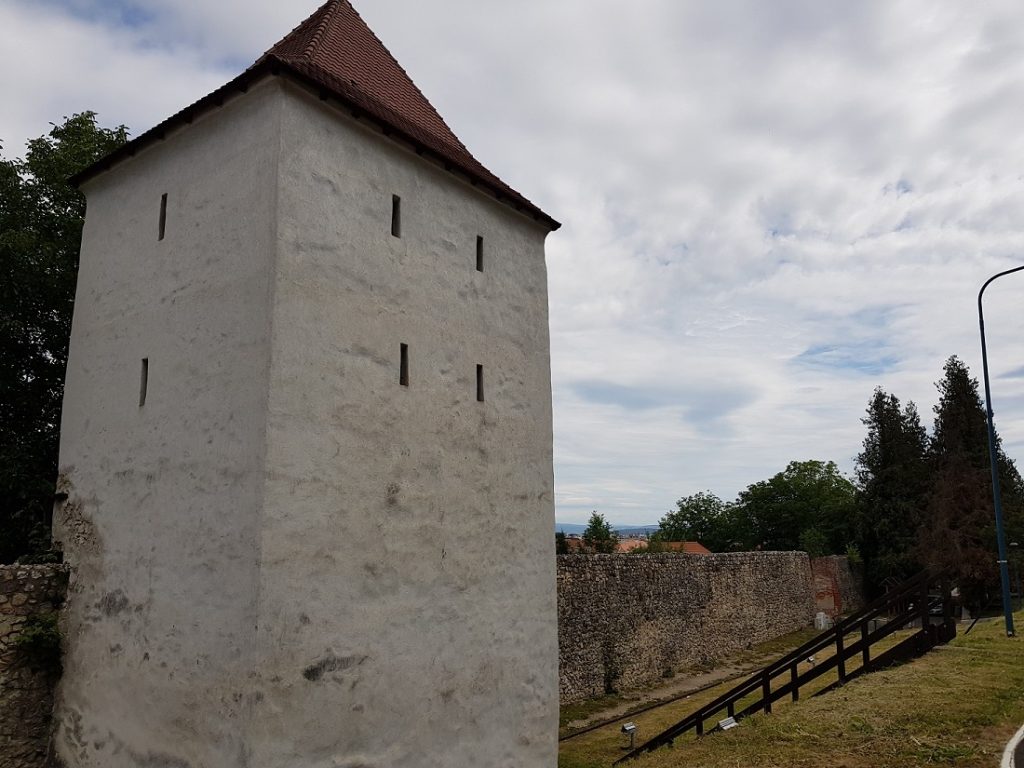
The fortifications of Brașov
If you don't feel like climbing another hill and moving away from the city center, but you really want to get a taste of militarism, you can visit the fortifications of Brasov itself. At first glance, you might think that their location is chaotic and meaningless. But that's not the case. If you look closely at the map of the defensive structures, you can easily see the outline of old Brașov, which was protected by the walls. Everything outside these walls is relatively new.
Incidentally, historians write that the Saxons (a Germanic tribe), who formed the basis of the population of early Brașov, forbade Romanians from settling within the fortress walls in the 13th-17th centuries. They could only enter the city at certain times and had to pay a fee for the right to sell their goods inside the fortress. Such was the discrimination.
The construction of fortifications surrounding Brasov began in the 15th century. Historical records mention 27 towers and 8 bastions with traditional and not-so-traditional names: artillery tower, powder tower, archers' tower, weavers' bastion. The most famous and grandiose are the White and Black Towers. Fact-checking has established that the Black Tower is about as white as the White Tower. But let's believe the Romanian legend: in 1559, lightning struck the tower, it burned, and since then it has been given its name.
The fortifications of old Brașov are also worth seeing because, despite being close to the center, they are literally surrounded by nature. You can enjoy a pleasant walk with views of the old town on one side and wooded hills on the other. It is no surprise that locals choose this part of the city for sports activities.
Travel guides usually highlight Catherine's Gate and Shkey Gate as tourist attractions in the city. However, it is more accurate to consider them as part of the city's defensive structures. Our ancestors did not build gates in the middle of a bare field.
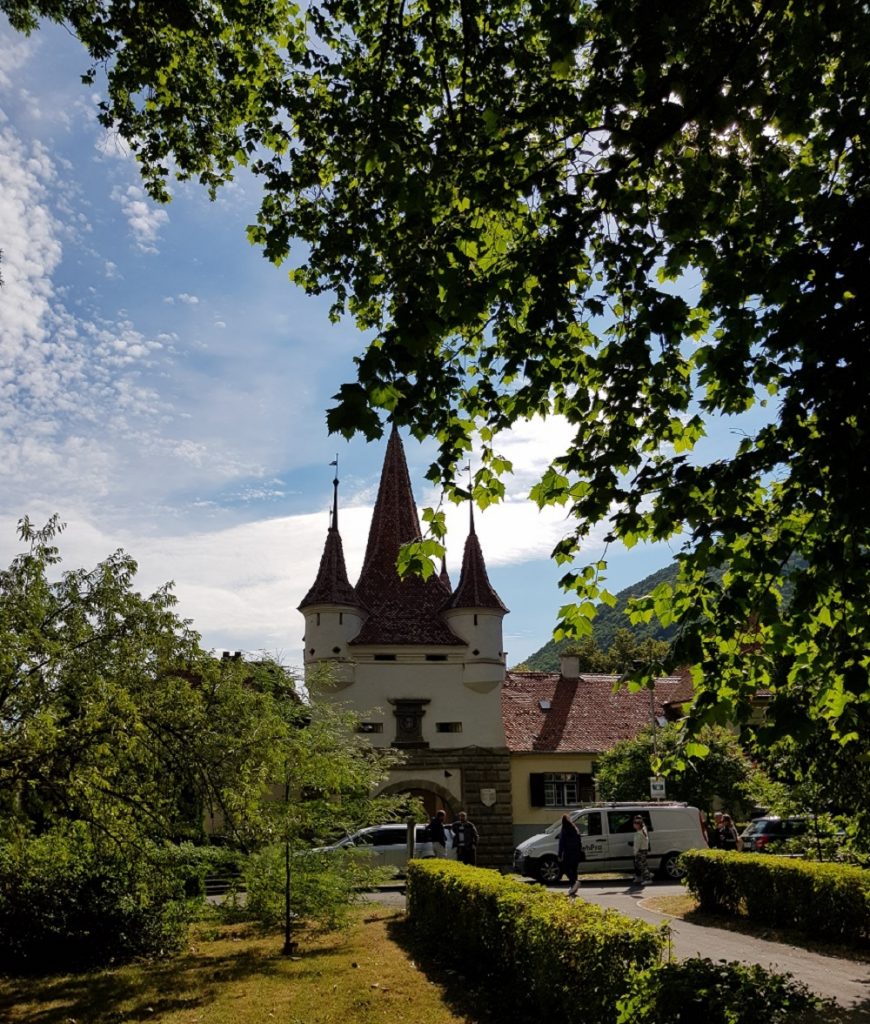
Catherine's Gate and Shkey Gate
Catherine's Gate is the only city gate in Brașov that has survived since medieval times. Built on the site of the old gate in 1559, it was severely damaged by earthquakes and fires in 1689 and 1738. As a result, only the central tower is part of the original gate.
These gates were also called the Wallachian Gates, meaning Romanian. Remember the discriminatory policies of the local German administration in the 13th-17th centuries? Well, the Wallachian Gates were the only entrance to the city that could be used by Romanians living in the Shkey area. The other four entrances were closed to them.
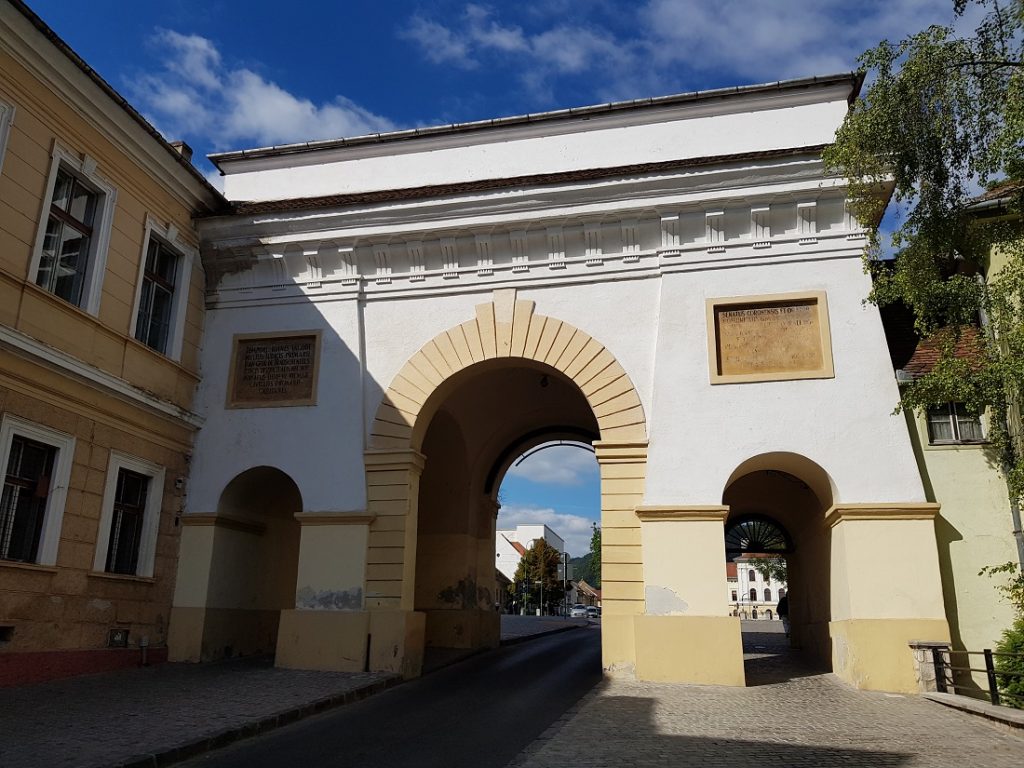
The Shkey Gate is much younger than the Catherine Gate. It was built in 1827-1828 and resembles a triumphal arch. The gate separates the old town from the Shkey district, where many Romanians lived.
Strada Sforii Street
Strada Sforii Street, which translates as "Rope Street," is one of the narrowest streets in Europe. Its maximum width is 135 centimeters, and its minimum width is 111 centimeters. What is the point of such streets, you may ask? The fact is that when it was built in the 16th century, it was not a street in the literal sense of the word, but a corridor for firefighters. The architects did not anticipate that five centuries later, the street would acquire another function—that of a tourist attraction.
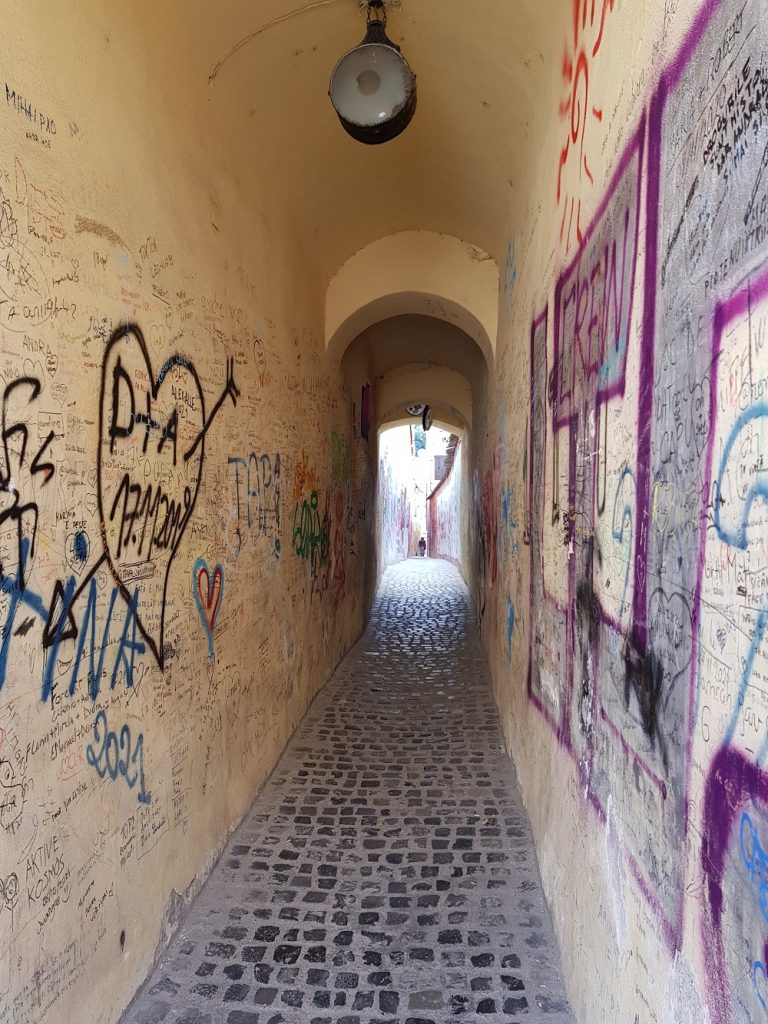
You will find 80 meters of not just a cramped walk, but a street art delight. All the walls of the street are covered with messages from tourists. And it's completely legal. So feel free to bring a marker, find a free spot on the wall, and leave a record of your happy moments in Brasov. It will give you a reason to come back and reread it years later. It's a more effective way than throwing a coin into a fountain.