Summer vacation is just around the corner, which means it's time to plan that long-awaited family getaway. You can go to the beaches of Antalya, as usual, or to the glamorous and youthful Ibiza. Or you can plan your vacation so that for a few days you will literally be transported into a fairy tale that will leave a lasting impression regardless of your age.
A fairy tale is quickly told, but a deed is not quickly done. Contrary to this popular wisdom, we would like to share with you one of the most unusual and beautiful routes in Germany — the "Fairy Tale Road." Our publication will help you plan your trip. And professional travel designers will make your tour of Germany bright and memorable. In our list, you will see the Gothic and medieval castles of Germany, and also find out how many castles there are in the country.
What is the "Roadof Fairy Tales"?
The Deutsche Märchenstraße, or German Fairy Tale Route, is a route that takes you to the most remarkable places associated with the work of the Brothers Grimm. Folklorists and fairy tale collectors from Germany became famous throughout the world and gave millions of people a happy childhood full of dreams and magic. And the Fairy Tale Road is not just a tribute to their work. It is Germany's most beautiful castles, ancient houses full of traditions and legends, and cozy museums, all united by the atmosphere of Grimm's magic.
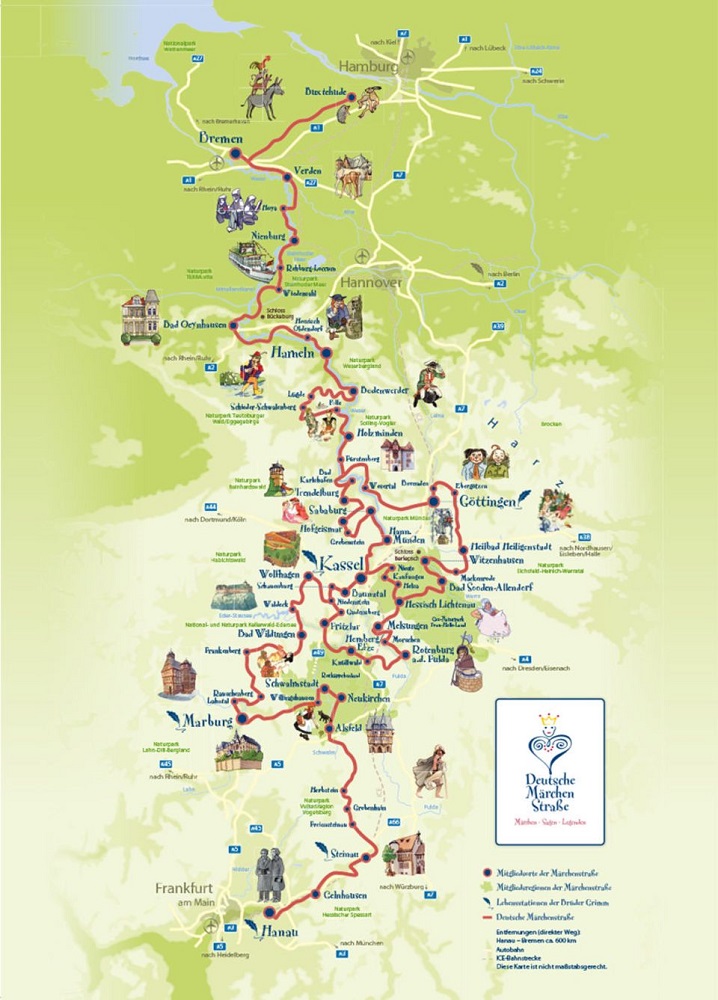
Fans of the brothers' work began planning a special route back in 1975. Since then, it has included about 60 towns and villages, stretching from Hanau in the south to the free Hanseatic city of Bremen. To make sure you don't stray from the right path, the road is marked with a special symbol — a heart stylized as a princess.
How to navigate the "Roadof Fairy Tales"?
The ideal option would be to rent a car. Then you will not only be able to cover most of the route, but also choose a comfortable pace of travel. You can rent a car for your family at Europcar, Hertz, Avis. Don't like any of these options? You can use aggregator to search among all rental companies. On average, a car will cost €50 per day.
Given the well-developed infrastructure, cycling is a suitable option: it is inexpensive and economical. By the way, if you are interested in other ways to save money while traveling, check out our selection of life hacks.
Germany also has a very well-developed public transport network. You can easily get around the "Fairy Tale Road" by traveling on green buses. Flixbus or the speedy trains Deutsche Bahn. We have compiled a list of the best websites for finding public transport tickets in Europe here.
Where to start your journey?
Logically and logistically, it makes more sense to start the Fairy Tale Route in Hanau, the hometown of the Brothers Grimm. Apart from sentimental considerations, there is common sense behind this choice. Hanau is located just 40 kilometers from Frankfurt am Main, which can be easily reached by any European airline (search for cheap flights on Travelhub).
Another option is the northern end of the road, the city of Bremen. It also has its own airport and is a major bus and rail hub. However, it will be more difficult to find flights from there.
Not sure if you want to burden your vacation with organizational issues, searching for accommodation, transportation, and planning your itinerary? Then a tour with visa support.
Let's go! Germany's"Fairy Tale Road": main points along the route
As we mentioned above, the Fairy Tale Road includes around 60 locations. Each of them will delight you not only with warm childhood memories, but also with exquisite Gothic and Baroque architecture, as well as traditional German hospitality.
However, visiting every stop on the route is incredibly difficult. That's why we've selected the top 10 locations that are not to be missed.
Hanau
Jacob and Wilhelm Grimm were born in 1785 and 1786, respectively, in the small German town of Hanau. In honor of the brothers, an annual fairy tale festival is held in the town. It runs from mid-May to the end of July and attracts 80,000 tourists each year, making it the largest festival in the state of Hesse.
There is indeed much to see: every year, the organizers delight visitors with premieres of theatrical productions based on the works of the Brothers Grimm. They take place in the beautiful surroundings of the Philippsruhe palace park.
The Philippsruhe Palace is beautiful even without the festival: it's like a miniature Versailles on the Main River. Inside, you'll find the GrimmsMärchenReich museum (the Brothers Grimm's Fairy Tale Land). As you can imagine, it's dedicated to the brothers' work. It's also the only paper theater museum in Germany.
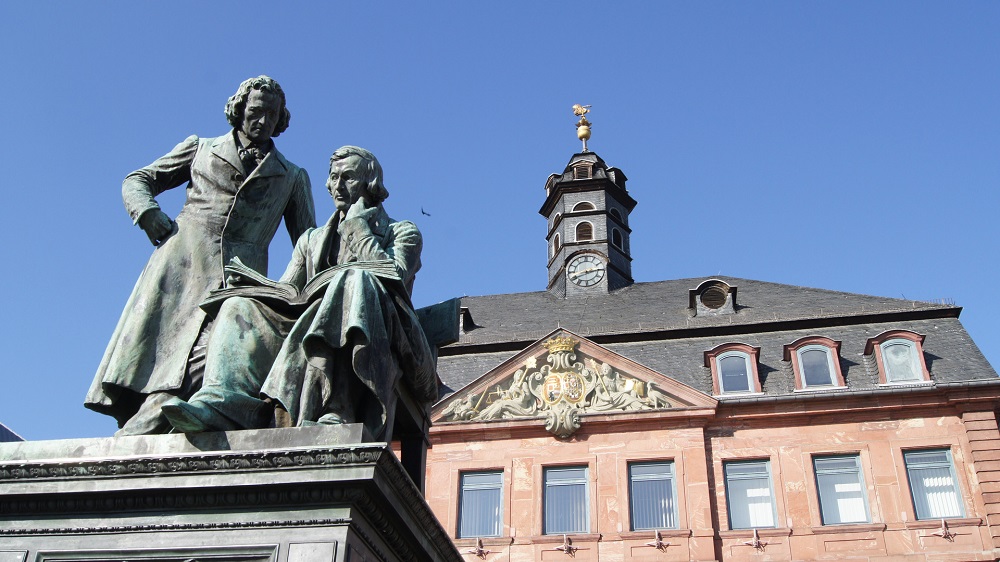
The city also boasts a monument to the Brothers Grimm and a 17th-century Walloon-Dutch church that are not to be missed.
Alsfeld: Little Red Riding Hood's house
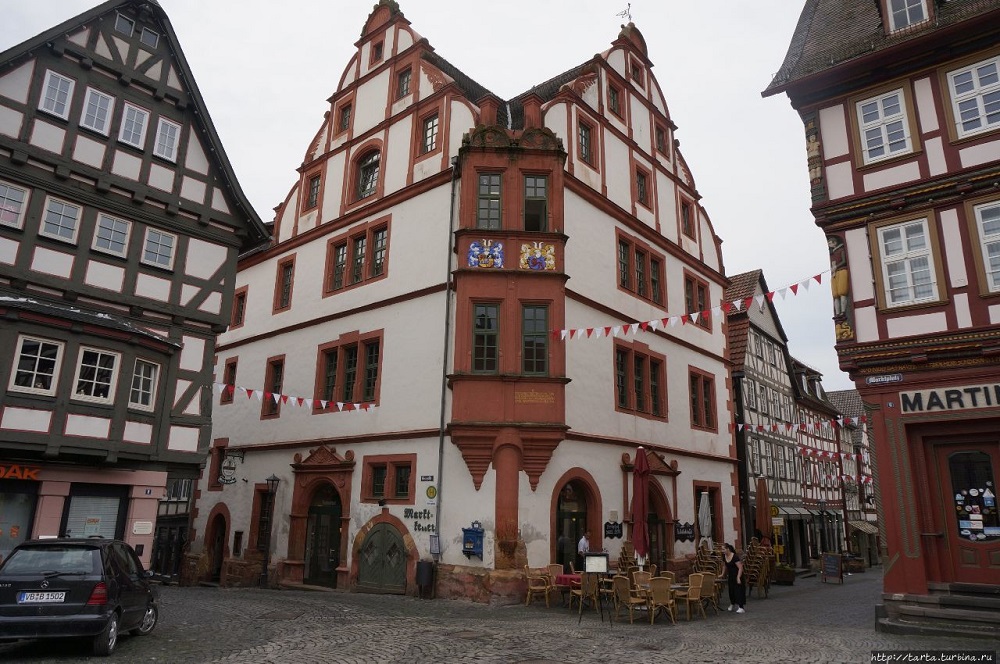
From Hanau, we move on to the refuge of all wolves, the home of the eternally young Little Red Riding Hood. Judging by the two-story 17th-century building, the girl lived in style.
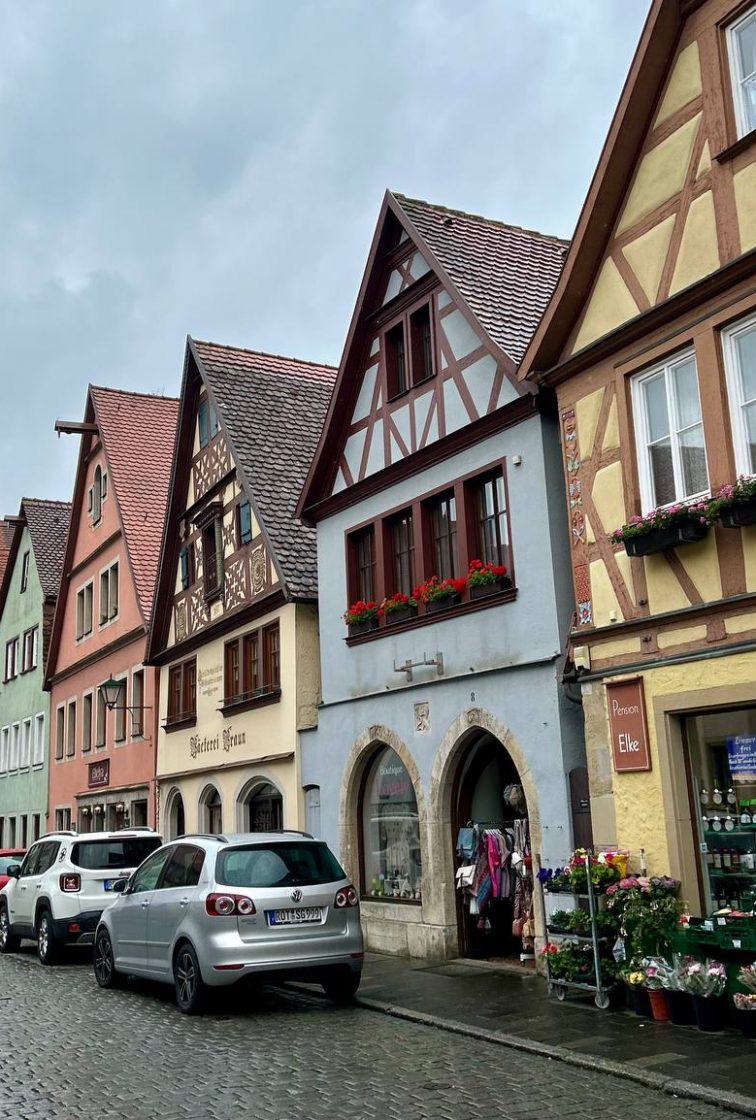
Alsfeld is known for its beautifully preserved half-timbered buildings. This architectural style, which is currently in vogue in Germany, was called "box work" and was typical only of peasant buildings.
It was also thanks to Alsfeld that Little Red Riding Hood acquired her world-famous costume. It was copied by the Brothers Grimm from local garments called "Schwelmer Tracht."
Marburg
What childhood did not shape in us, our "universities" will complete. This is exactly what happened with the fairy-tale brothers. To a large extent, their future as folklorists was predetermined by their studies at the University of Marburg and their acquaintance with the leading Romantic poet of the time, Johann Gottfried Herder.
The University of Marburg is notable not only because the Brothers Grimm studied there. It is one of the oldest educational institutions in Germany — in 2027, it will celebrate its 500th anniversary.
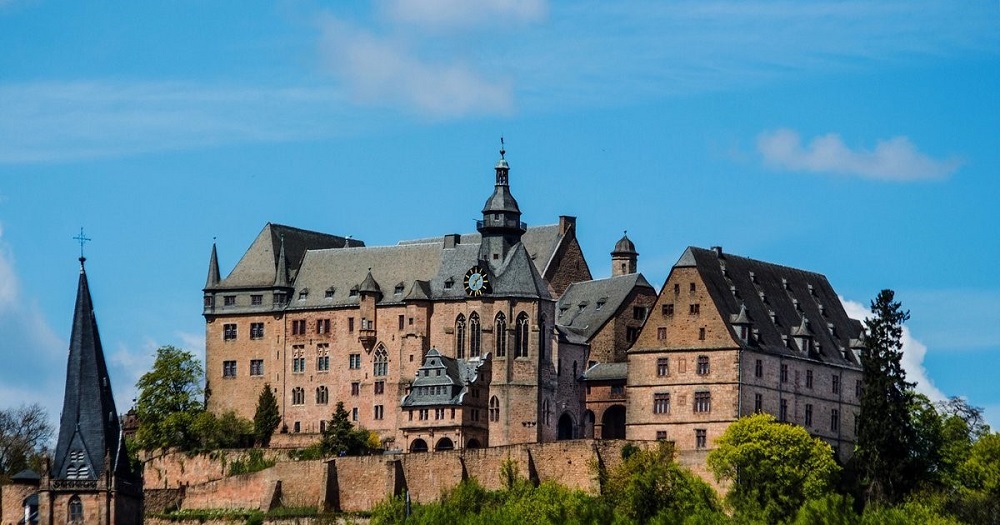
But Marburg is best known for its ancient 11th-century castle. Over the course of its thousand-year history, Marburg Castle has served as a powerful fortress, a pompous residence for the elector, and a prison for the most notorious criminals. Incidentally, you can also visit the dungeons where the latter were held. Do you like traveling to castles? Check out our top 10 most beautiful castles in Germany.
As for the work of the Brothers Grimm, every year "fairy tale parades" and festivals in honor of the writers are held within the walls of the university, the castle, and even simply on the streets.
Bad Wildungen: Snow White's house
Snow White is perhaps the most famous character in the Brothers Grimm fairy tales, owing her fame not only to them but also to Hollywood. The story of Snow White originates in the Bergfried region and the town of Bad Wildungen, where a museum dedicated to the fairy-tale beauty is located today.
In addition to the museum, the 17th-century Friedrichstein Castle, the 14th-century Gothic church, and the Bertsch exhibition mine are also worth visiting. The latter will give you an idea of the hard work of the seven dwarfs in the mines.
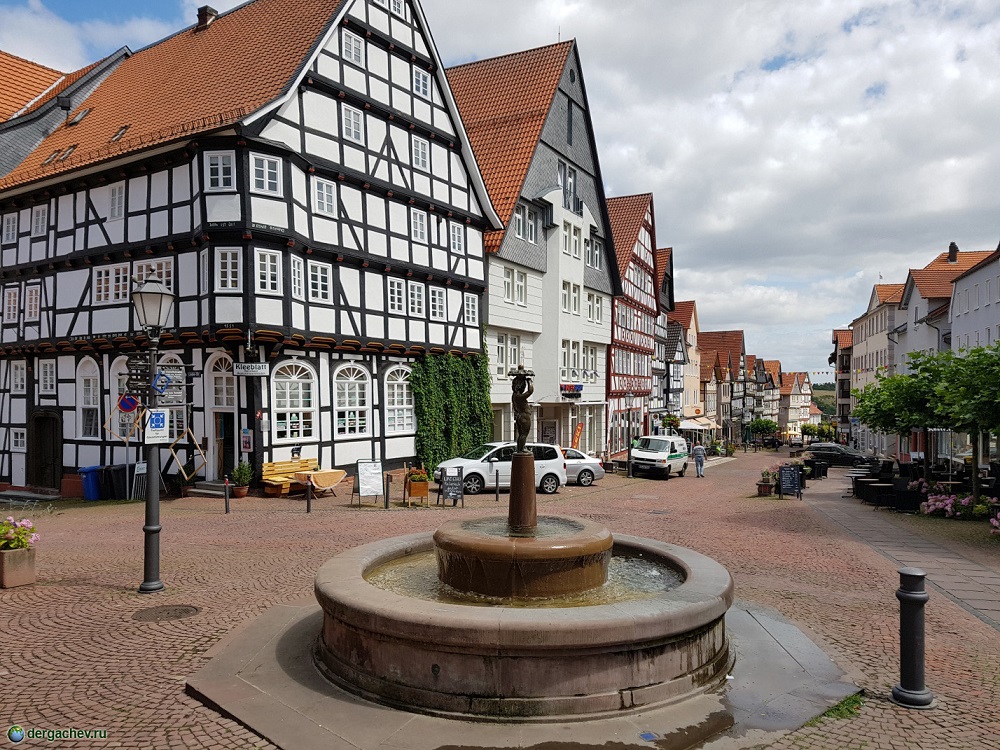
The best time to visit the Bergfreihait region is during Easter week. During this time, unusual themed entertainment is organized for residents and guests of the city: pressing Stepmother's malicious apples, egg races, and Easter bonfires. Who do you think awards the winners of the competitions? Snow White, of course.
Wolfhagen: The Wolf and the Seven Little Goats
In the works of the Brothers Grimm, only a person with a heart of stone would not sympathize with... the wolf. He gets his comeuppance from story to story. The demonization of this character in fairy tales, oddly enough, runs counter to his real veneration by the Germans. This is evidenced by numerous cities with "wolf" names. One such city, Wolfhagen, inspired the Brothers Grimm to write the fairy tale "The Wolf and the Seven Little Kids."
The local wolf, however, was much more decent than his fairy-tale counterpart. According to legend, Wolfhagen was built on the originally forested Hagen hill. When farmers were clearing the hill of trees, a wolf emerged from the grove and frightened the people. However, the wolf peacefully continued on its way. Since then, the new town has been called Wolfhagen, and the wolf has been immortalized on the coat of arms.
In the city, you can see Wolfhagen Castle, the Evangelical City Church, the market square, and the town hall, whose beams are decorated with 222 daisies. In April, you can brighten up your leisure time with a folk festival.
Sababurg: Sleeping Beauty's Castle
With its logo, Disney has given us a false impression of what Sleeping Beauty's castle looked like. The brand's creators did not care much about historical accuracy and simply decided to use Germany's most famous castle, Neuschwanstein in Bavaria. In reality, Sleeping Beauty did not live there, but in Sababurg Castle in the Reinhardwald region.
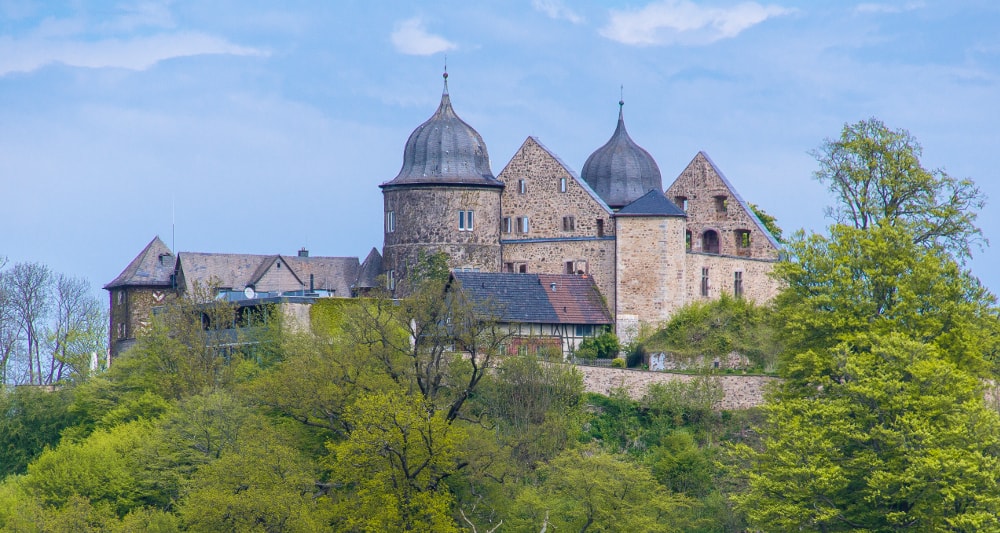
Despite its 700-year history, Sababurg looks much more modest. History has not been kind to it: the castle was only restored after its destruction in 1959. But this has not detracted from its fairy-tale spirit. The legends about the castle being founded by giants and the surrounding area create the right atmosphere: the Sababurg primeval forest with meter-high ferns and 500-year-old oak trees. Germany is marked by chic but little-known natural attractions, among which Saxon Switzerland occupies a special place (more about it here).
If your children are bored with fairy tales about giants, you can take them to the Sababurg Zoo. It is one of the oldest zoos in Europe (founded in 1571) and includes both local and exotic fauna.
Trendelburg: Rapunzel's Tower
Admire the strength of will of the beautiful Rapunzel and the length of her hair by visiting Trendelburg Castle. Its tallest tower, visible from several kilometers away, is called "Rapunzel's Tower." It reaches a height of 40 meters, and the castle walls are up to 7 meters thick. It's no wonder that the only option left for the knights was to climb up the maiden's hair.
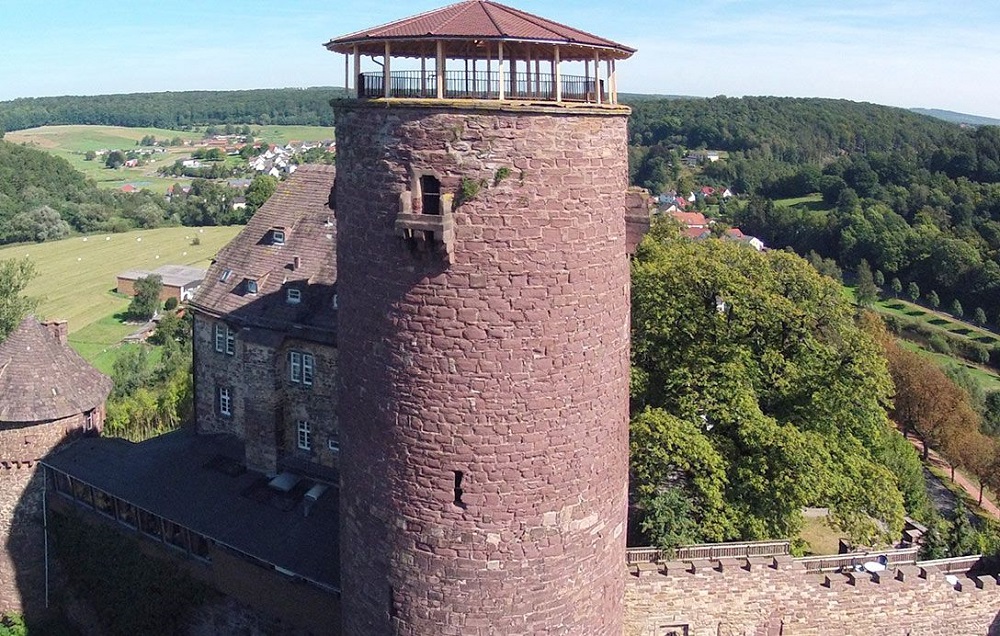
To enjoy the fantastic scenery all around, today you don't need to ask Rapunzel to let down her hair. All you have to do is climb "just" 130 steps. But the views are really worth it.
It is also worth taking a tour of the castle itself. This 14th-century building hides some terrifying things: a torture museum and a "hole of fear."
Polle: Cinderella's Castle
Don't lose your head, and especially your shoes — before us stands Cinderella's castle! Or rather, what remains of it. The once proud castle now lies in ruins. It has been in this state since the Thirty Years' War, almost four centuries ago.
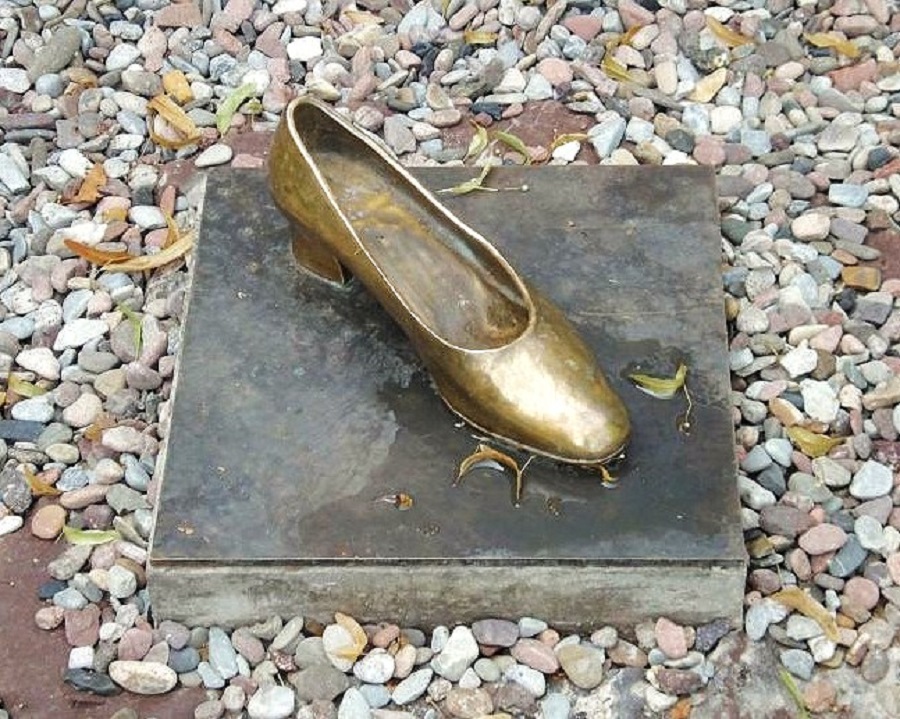
Nevertheless, these are attractive ruins offering an equally attractive view of the Weser Valley. Inside the castle, you will find a challenge waiting for you—to find Cinderella's slipper. Ladies can try their hand at this role by trying on the lost shoe.
Hamelin: The Legend of the Pied Piper
The Pied Piper from the Brothers Grimm fairy tale attracts not only rodents with his pipe, but also tourists. Just in case, be careful with children. According to legend, the Pied Piper of Hamelin can enchant children with his music, and then they disappear forever. No joke: researchers believe that the legend had real grounds!
There are many themed "rat places" in the city: two stylized fountains, the Pied Piper restaurant, "rat stones" (bronze signposts), a clock with the Pied Piper, and much more. In 2009, the city hosted the Pied Piper Festival. The hero of the fairy tale once again led the children out of the city along Bungalow Street and took them to Mount Koppen along the route indicated in the legend.
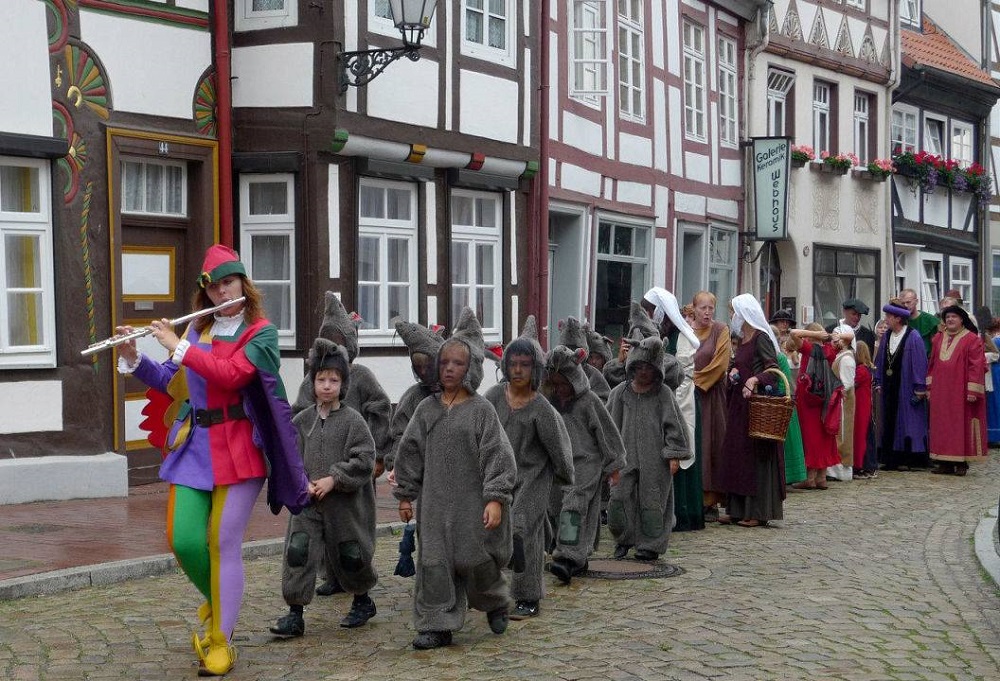
It is worth timing your visit to Hamelin to coincide with one of the many themed performances. From the beginning of May to the beginning of September, a play about the Pied Piper is performed every Sunday at the Wedding Palace. Gray jumpsuits and unique masks are specially created for the children, who play themselves as well as rats. You will probably never see cuter rats than these.
Bremen: The Bremen Town Musicians
Our "Road of Fairy Tales" ends in the city of the most cheerful and optimistic characters from the Brothers Grimm's stories — the Bremen Town Musicians. They have become true symbols of this northern German city. This is especially true since a monument was erected in the central square in 1951: a donkey, a dog, a cat, and a rooster stand on top of each other in the shape of a pyramid. It is interesting to note that in 1990, a similar monument to the Bremen Town Musicians was erected in Bremen's sister city, Riga (read more about what to see in Riga here).
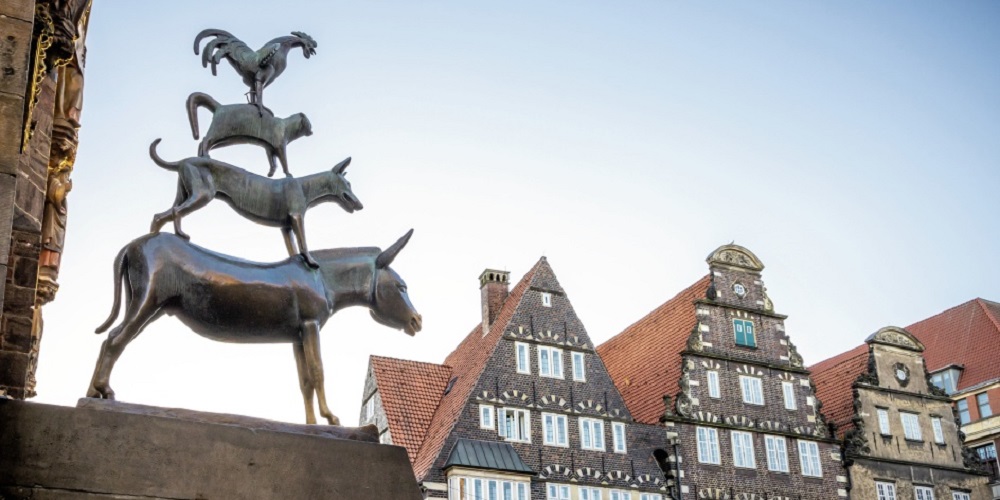
Of course, there are several traditions associated with the monument. One of them says that if you rub the donkey's front legs, look him in the eyes, and make a wish, it will come true. Another says that to return to Bremen, you just need to stroke the donkey's legs. In general, millions of tourists' hands diligently polish the Bremen Town Musicians year after year. After all, we want to believe in fairy tales!