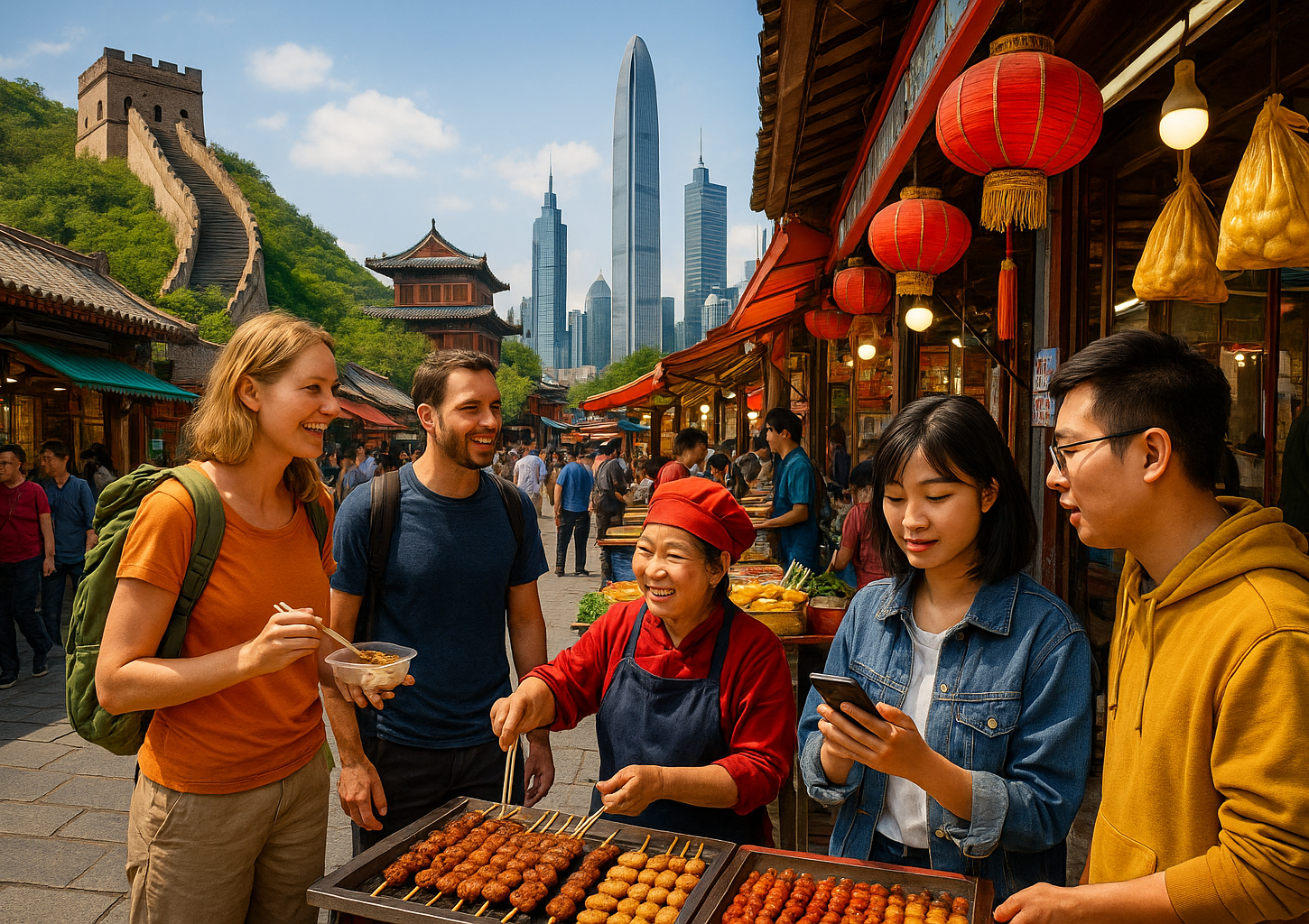
The author has compiled his personal experiences from three months living in Shenzhen, trips to Hong Kong and Guangzhou, and up-to-date information on entry requirements, visas, transportation, and prices.
1. Entry rules and visa
China is once again issuing tourist visas to citizens of the Republic of Belarus. The document can be issued for a maximum stay of 30 days and a 90-day entry corridor. From 2023, the fees will be reduced: single-entry visa — 100 Br, double-entry — 200 Br, multiple-entry — 300 Br. The surcharge for urgent processing is 80–190 Br.
Without a visa, the following is still permitted:
- Hainan — up to 30 days (independently or as part of a tour package).
- Group trips for 5–50 people — up to 15 days.
- Cruises and transit through Shanghai — 15 days.
- Guangdong Province when entering from Hong Kong or Macau.
PCR tests and health questionnaires have been canceled. Detailed instructions on how to obtain a visa are provided in a separate document.
2. Air tickets: where and how much
At present, there are no direct regular flights from Minsk to China. Belarusian citizens, as before, are forced to fly via Moscow, St. Petersburg, Istanbul, Tbilisi, Yerevan, Istanbul, or cities in Kazakhstan.
To find cheap flights, be flexible with your dates and sign up for notifications — the difference between months can be as much as 30–40%.
Transiting through Beijing? Save this transit guide and ready-made one-day city tour itinerary.
3. Where to live: from a hotel to an apartment
Double rooms in central Beijing cost $30 in summer and $13 in winter. In Shenzhen, they start at $22. We recommend chain brands (Novotel, Sheraton, Greentree Inn) — $30–40 per night, consistent quality.
Daily rentals: Beijing $30–50, Shenzhen from $27. Monthly rentals: studios $600–900, beachfront apartments $1,000–1,500.
If you need to instantly search for hotels using filters by area and rating, use large meta search engines.
4. Chinese cuisine: where to eat without breaking the bank
Menus without hieroglyphs are rare, so many people resort to KFC: a $5 meal deal. European restaurants — dishes from $10. Street canteens for locals serve food for $1.50; the quality is unpredictable. A safe option is "Muslim restaurants": a giant plate of noodles for $1.50–2, prepared right in front of you.
Prices in supermarkets: bananas $1–2/kg, apples $2–3, mandarins $1–2. Sausages and hot dogs are exotic items made from soy and spices.
5. Internet and mobile communications
SIM cards are sold with a passport. The basic rate is $20/month plus the same amount for connection. Life hack: rent a Wi-Fi router or connect to a wireless network in a café. Google, YouTube, and Instagram are blocked; you need a VPN.
6. Internal displacement

High-speed trains, planes, subways, ferries, and endless buses cover virtually every corner of the country. A subway ride costs $0.50, and a bus ride costs $0.30. Buy a plastic transport card for $4: top it up, ride, and then return it to get your deposit back. $10–30 is enough for a month within one city.
Electric mopeds—improvised taxis without traffic jams: $2 for a short trip, bargaining is a must.
For business groups, it is convenient to organize business trips with a single ticket, transfer, and reports.
7. ATMs and payments
Visa/Mastercard cards are not accepted everywhere; UnionPay is more popular. Bring cash or a virtual card from the Chinese system.
8. Mindset
Europeans in China may be photographed as a curiosity. Bargain: a shirt can easily be reduced from $35 to $5. Personal questions about salary or marriage are normal. Rules of politeness on public transport and regarding trash cans differ greatly from those in Europe.
9. Safety
There are surveillance cameras on every corner and police patrols around the clock, so it's safe at night. However, petty theft remains a problem: carry your backpack in front of you.
10. How much money to take for 10 days
| Object of expenditure | Amount, $ |
|---|---|
| Visa (2 persons) | 40 |
| Flight Moscow – Shanghai – Moscow | 950 |
| 3★ hotel (city center) | 500 |
| Nutrition | 300 |
| Insurance | 20 |
| Transportation and excursions | 200 |
| Total | ≈2 000 $ |
Our personal monthly expenses for two people are about $1,500.
11. Helpful tips
- Learn the gestures of Chinese counting: 1 to 4 are the same as ours, but after that they are different.
- Install an offline translator with hieroglyphs.
- Take your usual medications: dried frogs are easy to find in pharmacies, but activated charcoal is not.
- Baidu Maps with offline maps will help you avoid getting lost.
- For a quick selection of a tour to Hainan or Beijing, compare ready-made packages and individual itineraries.
We hope you now know how to plan your adventure in China: from the visa application form to the last yuan in your wallet. Travel boldly — there is so much more to discover!