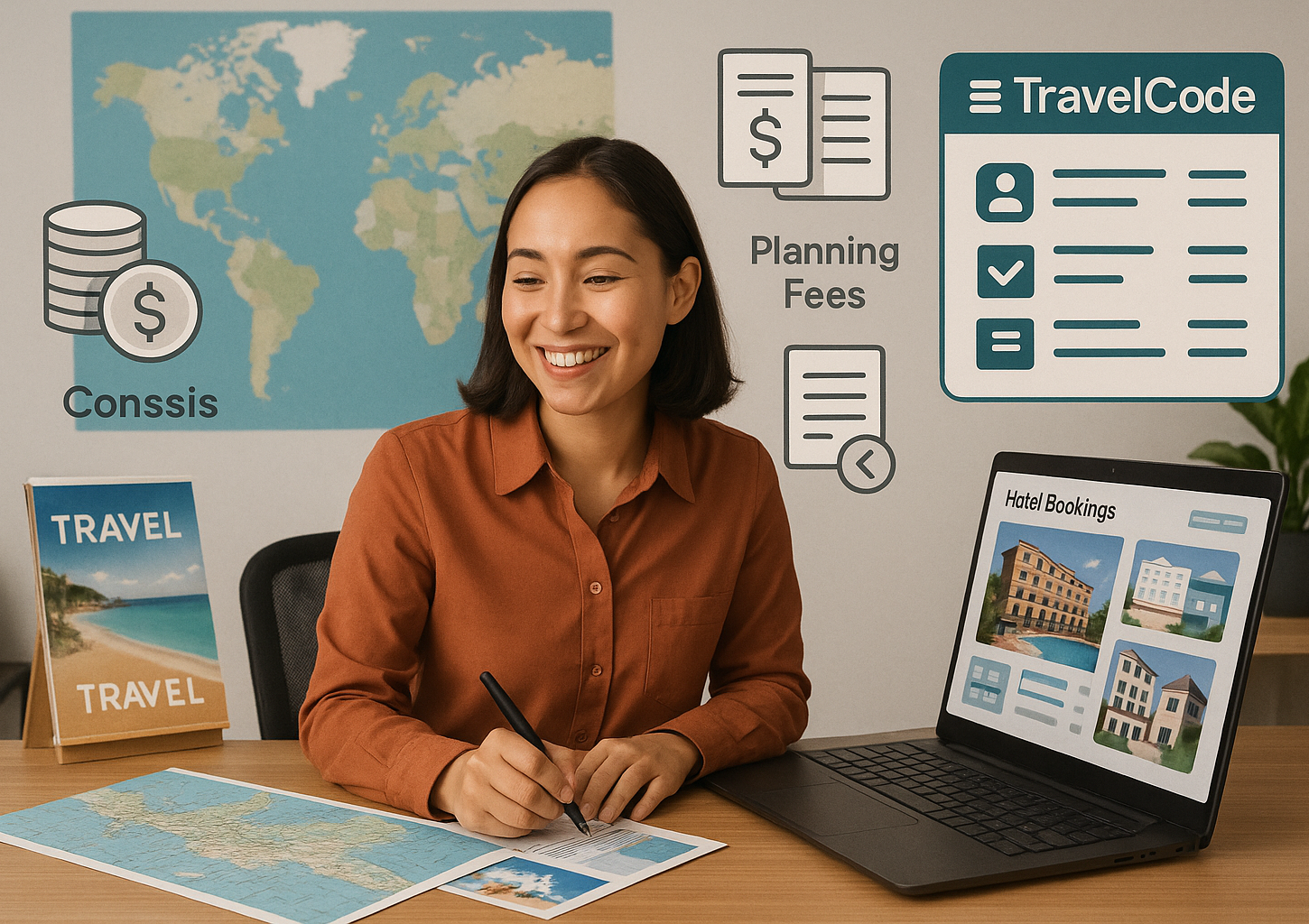
We explain step-by-step what a travel agent's income consists of, when they receive commission and how TravelCode simplifies the entire payment process.
A career as a travel agent combines a love of travel with the opportunity to build your own business. One of the first questions newcomers ask is, "How do travel agents get paid?" Below we'll break down the classic payout scheme, and show you exactly what TravelCode does differently and why it benefits consultants.
Main sources of income of a travel agent
Most of the earnings are generated from commissions. Another common element is planning or service fees. Depending on the specialization, an agent can book vacations, business trips, group tours or a combination of all destinations.
Booking fees
Let's imagine that a client needs a hotel. The agent selects an option, makes the reservation, and the hotel pays a commission, usually between 5% and 10%. TravelCode consultants have a slightly higher average rate due to partnership agreements. Clients turn to an agent not because of a discount, but because they receive expert support, convenience and additional benefits.
In addition to hotels, commissions can be on cruises, car rentals, insurance, yachts, excursions and entire package tours. The supplier's commission is transferred to the account of the host agency, which is then shared with the consultant.
Planning and service fees
The more complex the itinerary, the higher the specialist's time is valued. Many agents charge a flat fee for developing an individual itinerary for a week, starting at about 250 USD. The rate increases with experience. This model allows you to earn income even before the client actually travels.
How host agencies work
Most independent travel advisors join a host. This gives them an IATA number, higher commissions and access to tools that would be difficult to pay for on their own. In the classic model, the host collects the trip data, issues invoices to suppliers, controls payment terms and transfers the money to the agent after the client has returned home.
Payments are convenient, but not without disadvantages: paper checks, the need to "punch out" the amount, long processing times. Below we'll look at how TravelCode solves these problems.
What TravelCode does differently
Full support of invoices and payments
Everything that is processed through the back-end platform is automatically entered into the financial monitoring system. The accounting team invoices the supplier, tracks the status and transfers the commission to your bank account. You won't have to chase down checks.
No admission quotas
At the beginning of your career, it's important to build up a client base without pressure. TravelCode does not set a minimum volume to start. When an advisor is ready to grow, they move to the next level of certification, opening access to increased commissions and exclusive privileges.
Strong partner network
TravelCode now has more than 6,000 hotels in its arsenal - from boutique brands to world-famous chains. Due to collective purchasing power, the platform trades additional bonuses for clients and increased commissions for consultants. The program also includes its own exclusives, which are not available on the open market.
Training and development
The online academy covers two tasks at once: training newbies and helping experienced agents to scale. Courses cover topics from the basics to niche areas like working with DMCs, business groups and VIP clients. All training is included in the subscription, there are no additional fees.
Frequently Asked Questions
What percentage of commission does the agent receive?
If the agent handles the entire turnkey tour, he or she receives a commission on all elements plus perhaps a planning fee. When the task is limited to booking a hotel, only that segment is paid for. The final figure depends on the scope of services.
Who actually pays the agent - the customer or the supplier?
The money comes from the supplier: hotel, cruise line or tour operator. If there is a service charge, it also goes through the host agency to maintain transparent financial reporting.
Is it possible to make money on airline tickets?
Yes, but it all depends on the airline's policy and fare class. Some carriers offer a percentage or flat fee, especially for award or group bookings.
What are the most profitable niches?
High margin destinations - luxury, corporate events and large groups. The higher the check, the higher the commission. In addition, these clients are more likely to be willing to pay for extended consultations.
How to start your career with TravelCode
If you love traveling and want to build a business with on-time payments and reliable support, apply now. The team will train, provide tools and help you find your first clients.
Conclusion
The answer to the question "How do travel agents get paid?" boils down to three points: commissions, service fees and choosing the right host agency. TravelCode has optimized every link in the chain, eliminating paperwork and speeding up payments. So consultants can focus on what matters most - creating the perfect travel experience for their clients.
Separately, a flexible search engine helps to find cheap air tickets, and premium clients appreciate the ability to book luxury hotels with bonuses instantly. For the corporate segment, there is a powerful business travel platform where budgets can be easily calculated and expenses controlled. Peace of mind lovers appreciate the refundable airfare option, groups save time with the group booking service, and a single window for all services allows for quick booking without unnecessary tabs.